On this page
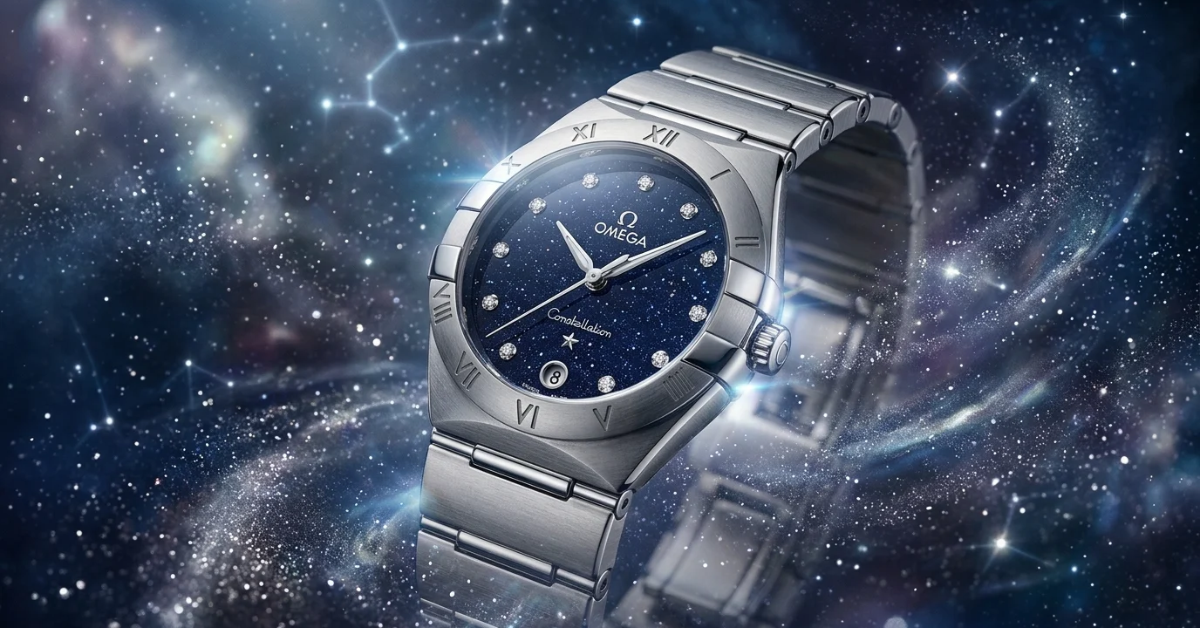
Search for "Omega Constellation Celestial Blue" and you'll find the name used like a model: retailers list it, resale sites sort by it, buyers ask for it. In fact it's a color. Omega introduced it in 2022 as one of four pastel dials on a small Constellation, and the way the watch is built around that color is what makes it worth a closer look.
What "Celestial Blue" Actually Is
When Omega added a new 28mm Constellation in 2022, it offered four pastel dial colors: Blush Rose, Patchouli Blossom, Celestial Blue and Green Matcha. All four share the same case, movement and construction. Only the dial and the matching bezel numerals change.
The Celestial Blue version is reference 131.10.28.60.03.001. Its core specifications, from Omega's own listing and press information:
- Case: 28mm stainless steel, 8.48mm thick, 30.52mm end to end
- Crystal: Domed sapphire with anti-reflective treatment on both sides
- Movement: Calibre 4061 quartz, with a "Long Life" feature and a 48-month battery life
- Water resistance: 3 bar, or 30 meters
- Bracelet: Stainless steel mono-rang bracelet with brushed links and polished decorative bars, with a 17.5mm width between the lugs
- Caseback: The Constellation Observatory medallion
What Makes the Dial Different
Pastel dials are easy to get wrong, because a flat wash of color can look dull. Omega's approach here has four parts, and they work together.
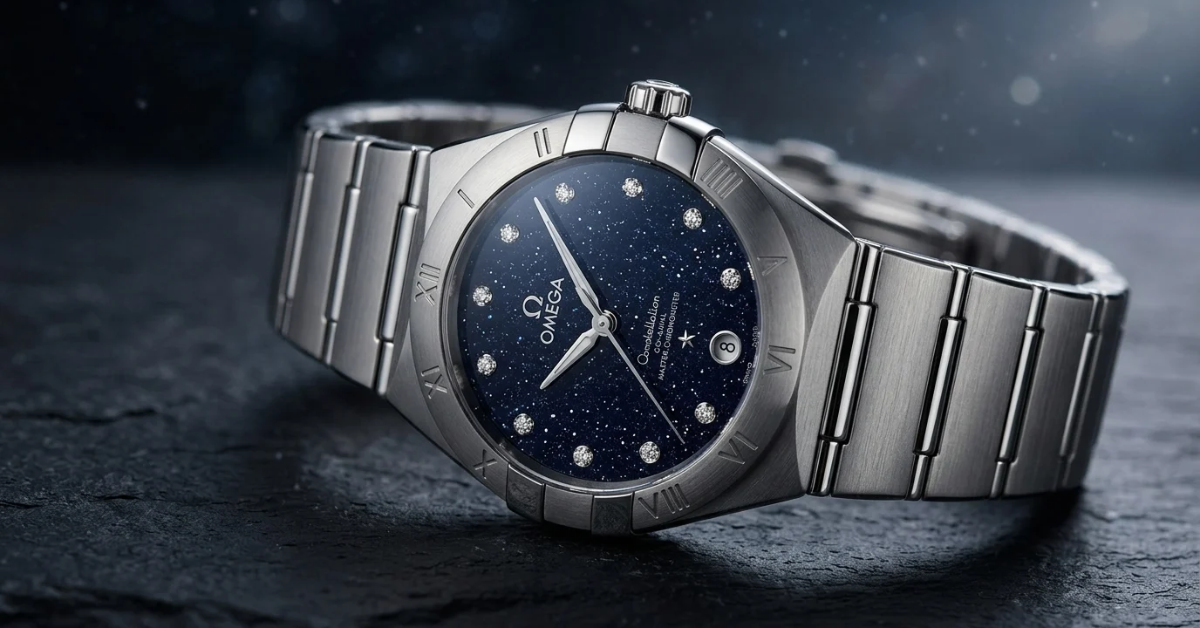
A sun-brushed, color-treated surface. The dial is finished with a sunray brush, then given a PVD color treatment. A sunray finish reacts to light, so the shade of blue changes as the angle does, which keeps a pastel from looking flat.
White gold where you'd expect steel. The applied indexes and elements are 18K white gold. On a steel quartz watch priced around $3,500, that's a detail that often shows up a tier higher, and polished white gold gives the indexes a crisp edge against the blue.
Skeletonized white gold hands. The hour and minute hands are 18K white gold and skeletonized, so they stay legible without covering the dial.
A bezel that matches. Omega engraved the bezel's Roman numerals and filled them in the same pastel blue as the dial. It's a small decision that ties the face to the frame, so the color doesn't stop at the edge of the dial.
Transferred markings in white (OMEGA, Constellation and SWISS MADE) finish a dial that's deliberately quiet.
The Rest of the Watch
The Constellation's signature design cues are all present: the polished claws at 3 and 9 o'clock that grip the case, the engraved Roman numeral bezel, and the single-row bracelet. Omega describes the case as brushed with polished bevels, with polished claws and a polished crown embossed with the Omega logo.
On the caseback is the Observatory medallion, a detail Constellations have carried since 1952. We cover its history in our look at what actually changed with the Constellation Observatory.
What It Isn't
An honest read of the spec sheet matters here, because the Constellation name covers a lot of ground.
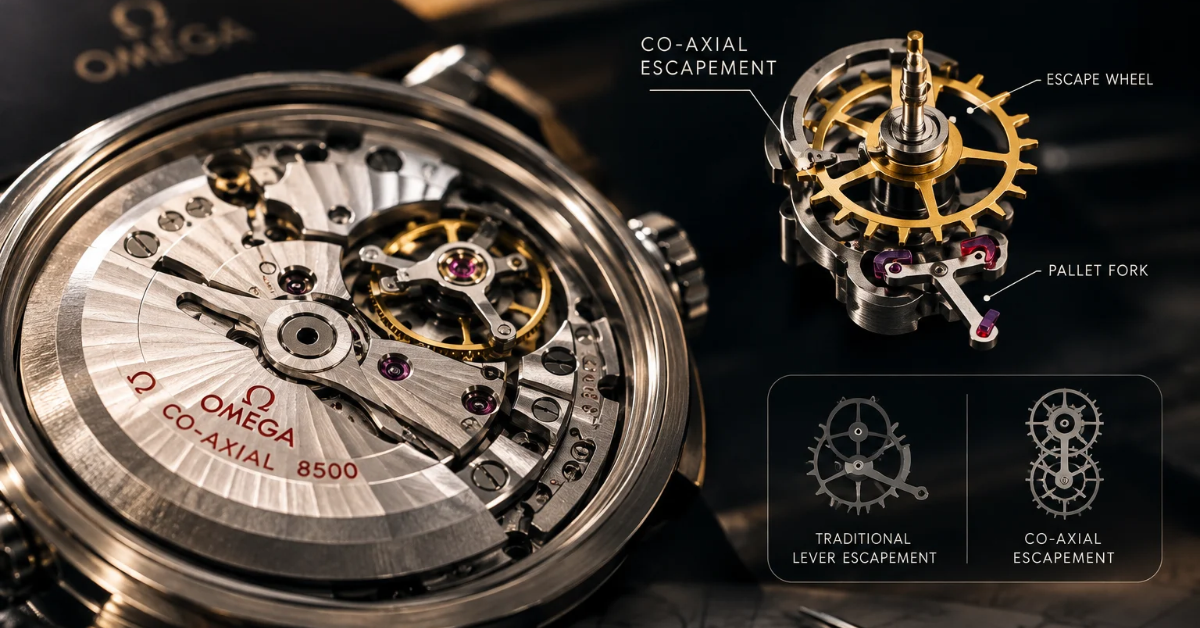
- It's quartz. The Calibre 4061 is a battery-powered movement, so it has none of the mechanical engineering we describe in our Co-Axial escapement explainer.
- It isn't a Master Chronometer. That certification applies to Omega's mechanical lines. If it matters to you, see our guide to verifying Master Chronometer certification for what it involves.
- It's a 30-meter watch. Fine for splashes and handwashing, not for swimming.
- It uses a battery. Expect to replace it roughly every four years. Our guide on how long an Omega lasts covers quartz maintenance.
None of that is a flaw. A 28mm quartz dress watch has no reason to be a dive watch. It's just worth knowing what you're buying.
Price and Value
US retailers list the Celestial Blue at about $3,400 to $3,600. A pre-owned example with box and papers from 2025 appeared at about $3,195, but a near-new watch tells you little about older ones. Our analysis of the fastest-depreciating Omega models found that quartz Constellations tend to lose a lot of value on the secondary market, so buy this one because you'll enjoy wearing it. If you're shopping used, that same pattern works in your favor on price.
Who It Suits
It suits you if you have a small wrist, want a polished everyday watch that doesn't shout, and like a color-led look. At 28mm with 17.5mm lugs, it fits slim wrists well, and the steel bracelet makes it easy to dress up or down. It's sold as a ladies' watch, but the size and style are what matter.
Look elsewhere if you want a larger case, a mechanical movement, or real water resistance. Our Constellation review covers the bigger sizes and automatic models, and our comparison of the De Ville and Constellation helps you choose between Omega's two dress lines.
Buying Tips
Match the reference number (131.10.28.60.03.001) against Omega's own listing before paying, particularly on the secondary market. Our guide to spotting a fake Omega covers the checks worth running, and our Omega buying guide helps you compare it with the rest of the catalog.
FAQ
Is "Celestial Blue" a separate Omega model? No. It's one of four pastel dial colors on the 28mm quartz Constellation introduced in 2022, alongside Blush Rose, Patchouli Blossom and Green Matcha.
What movement does the Celestial Blue Constellation use? The Omega Calibre 4061, a quartz movement with a 48-month battery life.
How water resistant is it? It's rated to 3 bar, which is 30 meters or 100 feet.
What's special about the dial? It's sun-brushed with a PVD color treatment, and it has applied indexes and skeletonized hands in 18K white gold, plus Roman numerals on the bezel matched to the dial color.
How much does it cost? Roughly $3,400 to $3,600 new at US retailers.
Is it a Master Chronometer? No. The Master Chronometer standard applies to Omega's mechanical movements, and this is a quartz watch.
Conclusion
The Celestial Blue Constellation is a small watch that takes its color seriously. The sun-brushed dial, the white gold details and the matched bezel numerals all push in the same direction, and the result looks more expensive than its quartz movement and 30-meter rating might suggest. Treat it as a refined everyday dress watch, and it's easy to like.
Senior Watch Writer
James Whitfield
James has spent over a decade covering Swiss horology, vintage markets and modern releases. He believes the best watch is the one you actually wear.