On this page
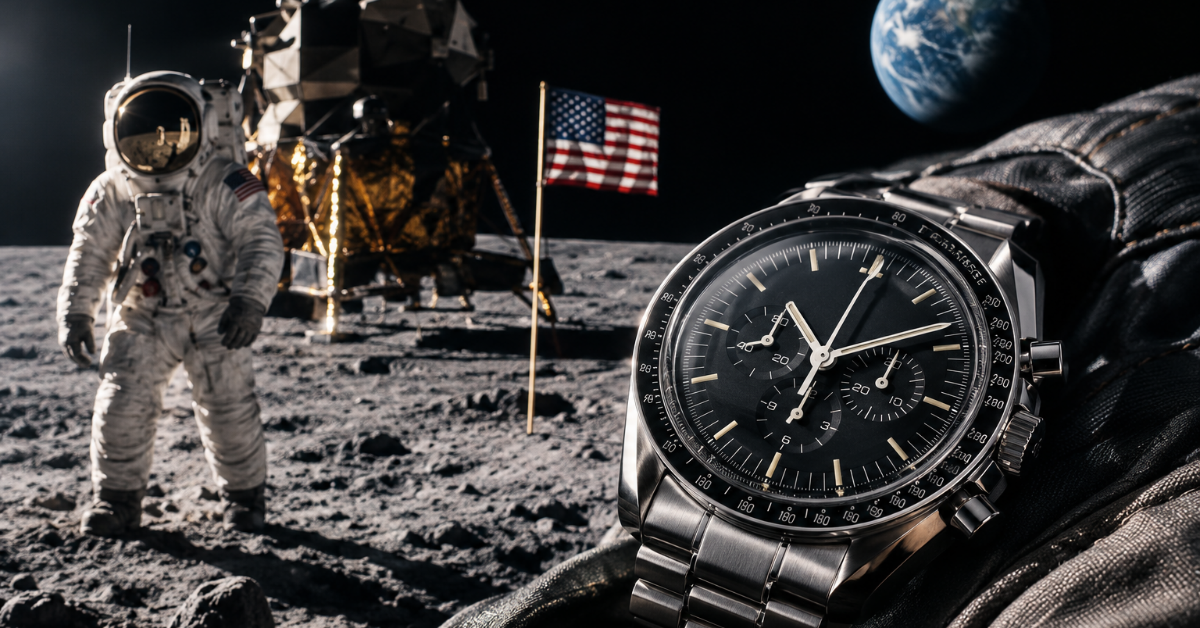
Plenty of watches have origin stories. The Speedmaster has a flight record. That difference is why a watch designed for racing in 1957 is still one of the most recognizable chronographs in the world, and why Omega's marketing has had more than half a century of material to work with.
Our piece on why the Moonwatch actually went to the Moon covers the NASA testing in detail. This article picks up the story where the testing ends, on the Moon, and follows it into the showroom.
The Short Version of How It Got There
The Speedmaster flew before NASA officially wanted it. Astronaut Wally Schirra took his own Speedmaster into orbit on Mercury Sigma 7 on October 3, 1962. NASA then put several watches through its qualification tests and certified the Speedmaster on March 1, 1965. Three weeks later, on March 23, it flew on Gemini 3 with Gus Grissom and John Young.
That sequence matters for the story. NASA didn't pick the Speedmaster because of a marketing campaign. Astronauts had already chosen it, and the agency's tests confirmed their choice.
July 20, 1969: The Watch on the Moon
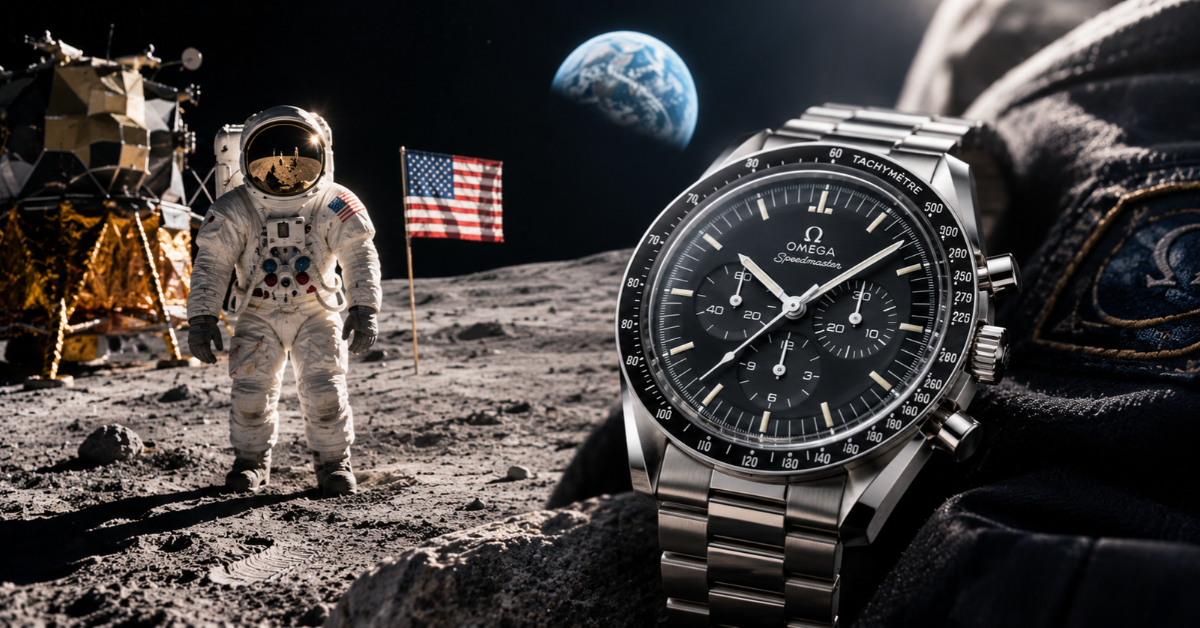
When Apollo 11 landed, Buzz Aldrin wore his Speedmaster on the lunar surface, which makes it the first watch worn on the Moon. Neil Armstrong's watch stayed behind. The commonly told account is that the lunar module's onboard clock was malfunctioning, so Armstrong left his Speedmaster inside as a backup timer while he walked outside. It's a small detail, and it's part of why the story feels real: nothing about it was staged.
Omega moved fast to mark the moment. Four months after the landing, it held an Astronaut Appreciation Dinner in Houston, where a gold Speedmaster, reference BA145.022, was presented to NASA's astronauts. Only 1,014 of those watches were produced between 1969 and 1973, and they remain highly sought after.
Apollo 13: The Second Chapter
The Speedmaster's other defining moment came in April 1970, when Apollo 13 was crippled by an onboard explosion. With much of the spacecraft's equipment shut down to conserve power, the crew needed an accurate way to time a 14-second engine burn by hand. They used their Speedmaster chronographs. The crew returned safely, and on October 5, 1970, NASA presented Omega with its Silver Snoopy Award, an honor astronauts give to suppliers who contribute to mission safety.
Few product stories contain a rescue. That one gave Omega a narrative about reliability under pressure that no advertising agency could have invented.
Why It Keeps Selling
Having a good story isn't the same as selling watches for decades. Four things have kept this one working.
The Story Is Checkable
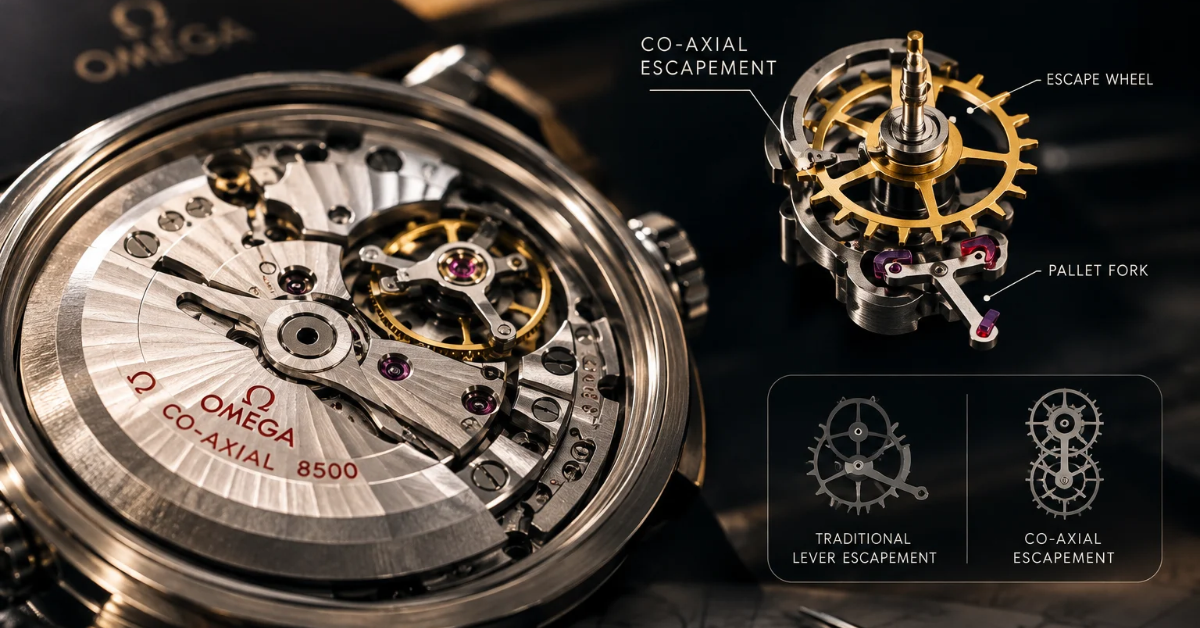
NASA's tests, the 1965 certification and the flight record are public history. Omega's own representatives describe the Apollo role as invaluable to the brand, and it's easy to see why: it doesn't rely on Omega's word. There's even a neat footnote in our history of how the Co-Axial escapement came to Omega: the first working prototype of that escapement was fitted into George Daniels' own Speedmaster.
The Watch Barely Changed
Most brands redesign their icons. The Moonwatch is still a hand-wound chronograph that looks recognizably like the one on the astronauts' wrists, and the current version is inspired by the fourth generation worn on the Moon. A buyer today gets something that visibly connects to the photographs.
Omega Keeps Feeding the Story
Omega marks the story with limited editions, and collectors pay attention:
- Apollo 11 50th Anniversary (2019): A Moonshine gold edition limited to 1,014 pieces, echoing the number of gold watches made in 1969 to 1973, and a steel edition limited to 6,969 pieces with an engraving of Aldrin descending to the lunar surface.
- Snoopy editions: One marking the award's 45th anniversary (limited to 1,970 pieces, for the year of the award), and the Silver Snoopy Award 50th Anniversary released in 2020.
The Market Responds
A major pre-owned dealer's data shows the classic 42mm Moonwatch Professional is its top-selling model overall. Our earlier comparison of the Speedmaster '57 and the Moonwatch noted that Moonwatch valuations rose about 67% over two years. The Silver Snoopy 50th has been reported to trade above retail, and one buying guide calls it the strongest performer among the limited editions over five years.
Not every edition does well, though. One owner of the 6,969-piece steel Apollo 11 edition argued its resale value is weak because the run was too large. That's one person's view, but it's a useful reminder that "limited" and "scarce" aren't the same thing. For current prices, see our Moonwatch price guide.
The Story Now Reaches Cheaper Buyers
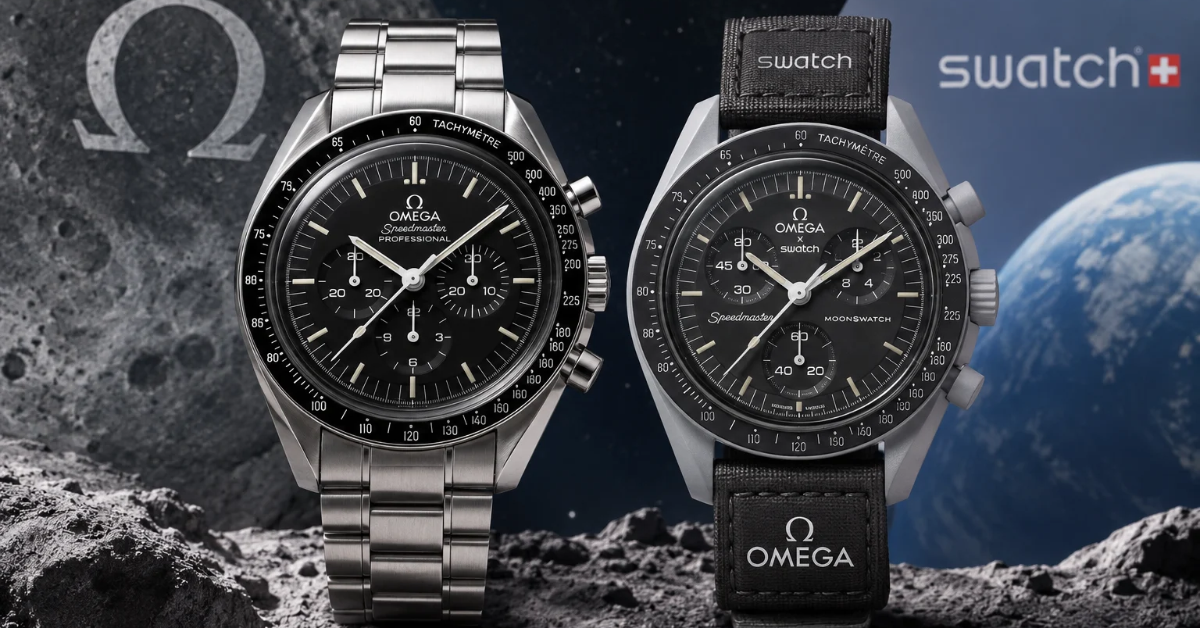
In 2022, Omega and Swatch put the Speedmaster's look on a $300 quartz watch. We dig into what that does and doesn't mean in our look at the MoonSwatch. For many people it's a first introduction to the watch's story.
Is It Just Marketing?
Partly, and that's fine. The facts behind the story are real: the testing, the flights, the rescue. The packaging around them, from astronaut kit boxes to numbered editions, is marketing. Buyers who separate the two tend to be happiest.
If you want the story itself, the standard Moonwatch carries it. If you're drawn to a specific edition, check the production number and what similar ones have sold for. Our guide to the best Speedmaster models can help you choose, and if you're shopping second-hand, our three questions to ask before buying a used Speedmaster and Speedmaster authentication checks are worth reading first.
FAQ
Did the Omega Speedmaster really go to the Moon? Yes. NASA certified it in 1965, and Buzz Aldrin wore one on the lunar surface during Apollo 11 on July 20, 1969.
Did Neil Armstrong wear a Speedmaster on the Moon? According to the commonly told account, no. He left his in the lunar module as a backup because the onboard clock was malfunctioning, so Aldrin's was the first Speedmaster worn on the surface.
What was the Silver Snoopy Award? An honor astronauts give to suppliers for contributions to mission safety. NASA presented it to Omega on October 5, 1970, after the Speedmaster helped the Apollo 13 crew time a critical engine burn.
Why do the Apollo 11 anniversary editions have 1,014 pieces? The 2019 Moonshine gold edition echoes the 1,014 gold Speedmasters made between 1969 and 1973 for NASA astronauts and other recipients.
Do limited-edition Speedmasters hold their value? Some do, including the Silver Snoopy 50th, which has reportedly traded above retail. Others, with larger production runs, have weaker resale, so check each edition before you buy.
Is the Moonwatch the same watch that went to the Moon? The design is recognizably the same and the movement is still hand-wound, but it has been updated over the years. The current version is inspired by the fourth generation that astronauts wore on the Moon.
Conclusion
The Speedmaster still sells because the story behind it holds up. A watch that astronauts chose, NASA tested, and a crew used to time its way home from a crippled spacecraft doesn't need to be invented. Omega's smartest move was to keep the watch close to what it was and let the history do the work.
Editor-in-Chief
Editorial Team