On this page
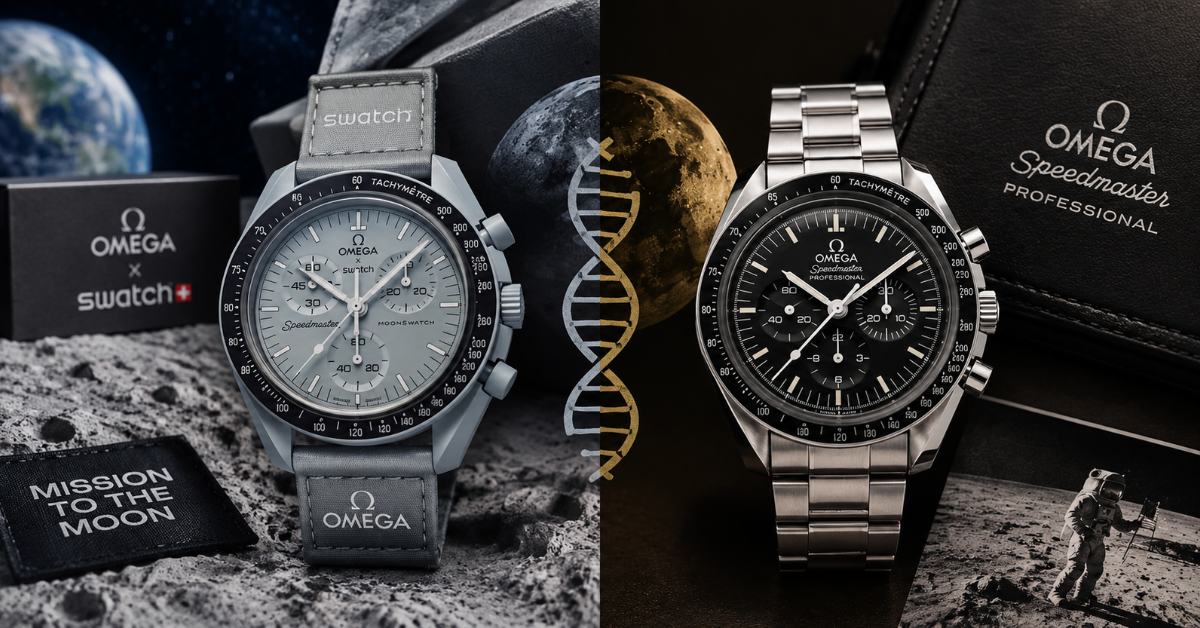
The MoonSwatch started an argument the day it launched in 2022, and the argument hasn't stopped. One side calls it a clever, affordable way into Omega's most famous design. The other calls it a novelty wearing a famous name. Both sides have a point, and the useful answer depends on which part of "Omega DNA" you mean.
What the MoonSwatch Actually Is
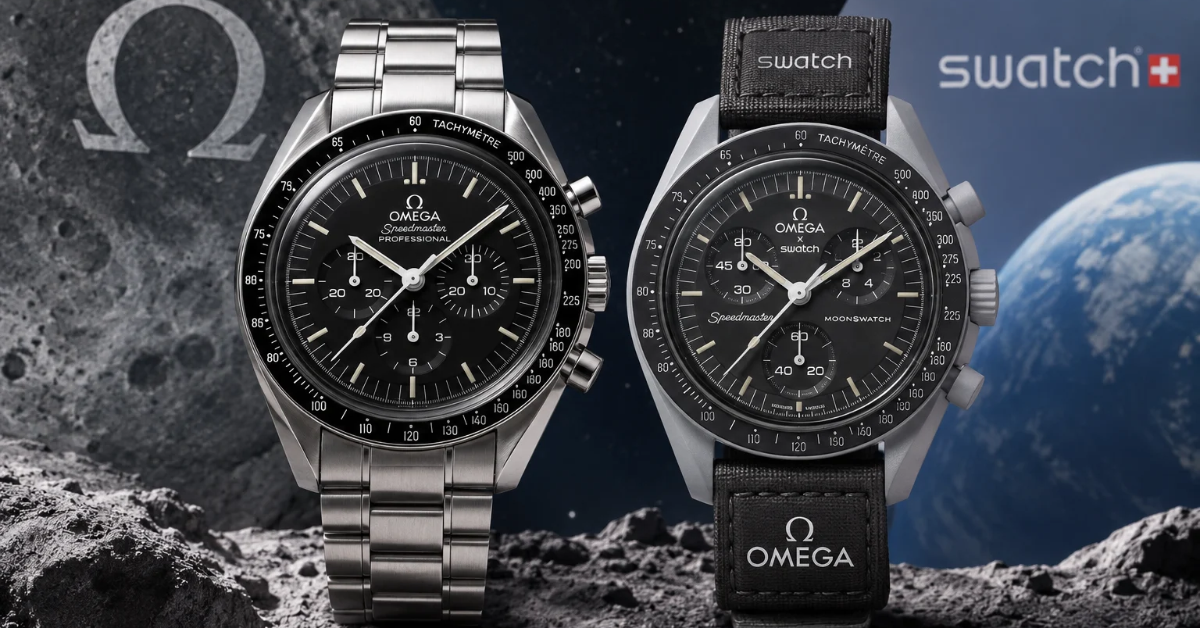
The MoonSwatch is a collaboration between two brands owned by the same group. Swatch describes it as a playful, down-to-earth take on the Speedmaster Moonwatch, built by fusing its bioceramic material with the Speedmaster's key design elements. Note the wording: a take on the Moonwatch, not a smaller Moonwatch.
The specifications tell the story:
- Case: 42mm wide, 13.75mm thick, 47.3mm lug to lug, in bioceramic.
- Material: Swatch's patented bioceramic, two-thirds ceramic and one-third biosourced material derived from castor oil.
- Movement: A quartz chronograph.
- Crystal: A plastic, bio-sourced crystal with a scratch-resistant coating, not sapphire.
- Water resistance: 30 meters.
- Strap: Velcro, with a nod to space-mission gear.
- Price: Standard models list at about $300. The moonphase versions run about $310, and the Earthphase, with its patented Earth-phase display, about $325.
It's also sold only in select Swatch stores, one watch per customer per day, which is part of why launch days turned into queues. Our Omega waitlists guide covers how that kind of crowd scarcity differs from the boutique allocation waits on limited Speedmasters.
What Really Is Omega
Start with what the MoonSwatch gets right, because it's more than a logo.
The design. The tachymeter scale uses the familiar font and the dot over ninety. The pushers and the proportions are recognizable at a glance. The dial carries the Speedmaster and "Omega x Swatch" branding, with SuperLuminova on the hour markers of the moonphase models.
The story. Swatch's moonphase versions put Snoopy on the dial, a reference to the Snoopy Award NASA gave Omega in 1970. That ties the watch to a real chapter of Omega's history, which we cover in our piece on why the Moonwatch actually went to the Moon.
Occasional real Omega materials. Some limited editions use Omega's Moonshine gold, an alloy developed by Omega, on parts such as the moon discs, dial or hands. Those are exceptions, and they cost far more than the standard $300 models. A gold Earthphase listed at $450 sold out, and at least one resale listing has asked about $870 for it.
What Really Isn't
Everything that makes a Speedmaster a Speedmaster mechanically is absent.
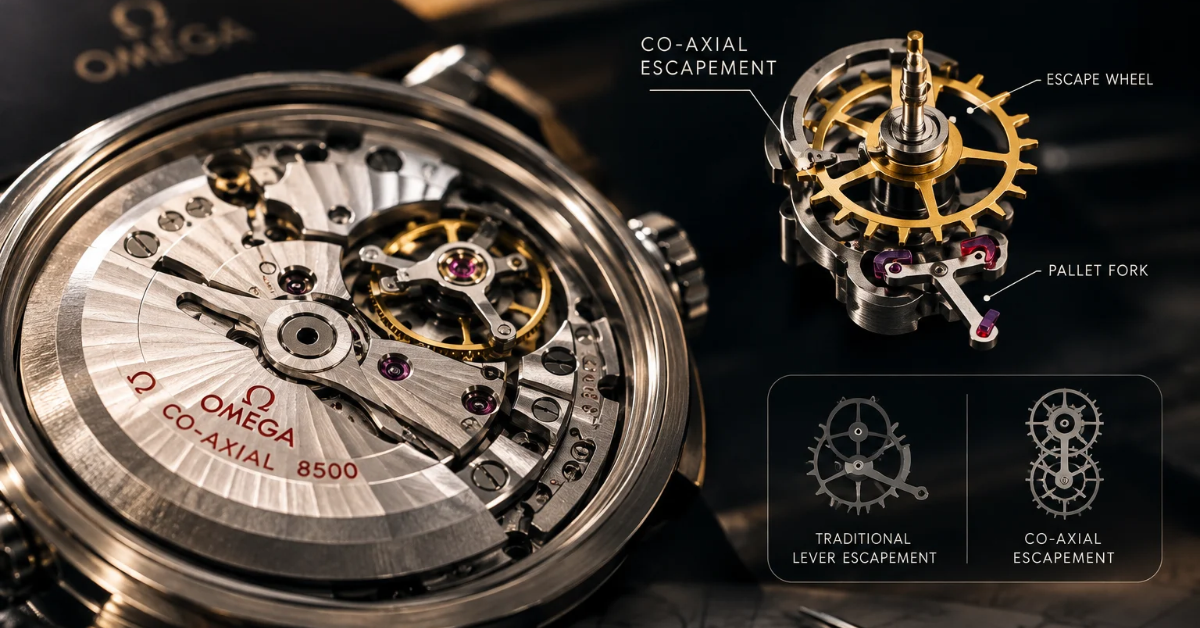
- The movement. A real Moonwatch runs a hand-wound mechanical chronograph, the same type of movement that flew with NASA. The MoonSwatch uses a battery-powered quartz one. Our Co-Axial escapement explainer shows the kind of engineering inside current Omega movements, none of which is in a MoonSwatch.
- The certification. Omega's Master Chronometer testing is independent and applied to the finished watch. Nothing like it applies here. See our guide to verifying Omega's Master Chronometer certification for what that involves.
- The materials. Bioceramic and a plastic crystal are a different world from steel and sapphire.
- The robustness. At 30 meters of water resistance, it's a watch for rain and handwashing, not swimming.
Omega licensed the design. Swatch built the watch. That distinction matters because it explains what you're buying.
So, Novelty or Real Omega DNA?
Both, and the split is clean:
Real Omega DNA?Case shape and proportions | Yes
Tachymeter bezel and dot over 90 | Yes
Dial layout and branding | Yes
Movement | No
Materials and crystal | No
Independent certification | No
Water resistance | No
If DNA means how a watch looks and what it references, the MoonSwatch has plenty. If DNA means how it's engineered and what it's built to survive, it has none. Neither reading is wrong. The mistake is treating one as the other.
Who It's For
Buy a MoonSwatch if you love the Speedmaster's look and want to wear it without worrying about a watch that costs several thousand dollars, or you want a fun, colorful weekend watch. At around $300, it's cheaper than a night out for some people and a better story than most fashion watches.
Skip it if you expect it to stand in for the real thing. Collectors who treat it as a stepping stone tend to be happy. Buyers who expect Omega quality at Swatch prices tend to be disappointed.
Save for the real thing if the history is what draws you. Our Speedmaster Moonwatch price guide covers what a genuine Moonwatch costs today, and our guide to the best Speedmaster models helps you choose one. If you're weighing the vintage-style Speedmaster '57 against the classic, see our comparison.
Watch Out for Fakes
Hot launches draw copies. A MoonSwatch is cheap enough that a fake isn't worth much, but resale buyers paying a premium for limited editions can be fooled. For general principles, our guide to spotting a fake Omega covers the habits worth building, and if you later buy the real watch, the Speedmaster-specific checks apply.
FAQ
Is the MoonSwatch a real Omega? No. It's a Swatch watch that uses Omega's Speedmaster design under license. Both brands belong to the Swatch Group, but the movement, materials and manufacturing are Swatch's.
What movement does the MoonSwatch use? A Swiss quartz chronograph, powered by a battery, rather than a mechanical movement.
What is bioceramic? Swatch's patented material: two-thirds ceramic and one-third biosourced material derived from castor oil.
How much does a MoonSwatch cost? Standard models list at about $300, with moonphase versions around $310 and the Earthphase around $325. Limited gold editions cost more.
Is the MoonSwatch waterproof? It's rated to 30 meters, which covers splashes and rain but not swimming or diving.
Will a MoonSwatch lead me to buy a real Speedmaster? For many people, yes. It works as a low-cost way to find out whether you enjoy the design before committing to a mechanical Moonwatch.
Conclusion
The MoonSwatch is Omega's design in Swatch's clothes, and that's a perfectly good thing to be as long as everyone is honest about it. Enjoy it for what it is: a bright, affordable tribute with a real story. If you ever want the engineering behind that story, the Moonwatch is waiting, and it's a different watch.
Editor-in-Chief
Editorial Team