On this page
Omega states its watches are designed to last a lifetime with proper care, and real-world evidence backs that up — Omega guarantees replacement parts for at least 20 years after a model is discontinued, and owners regularly report servicing movements from the 1960s and earlier. The official recommendation is a full service every 5 to 8 years, longer than the 3-to-5-year interval common at many other Swiss brands, made possible by the Co-Axial escapement's reduced internal friction. Quartz Omega models need battery replacement roughly every 2 to 5 years but can otherwise last just as long as their mechanical counterparts.
"Lifetime" is a word watch brands use loosely, and it's worth pressure-testing rather than repeating. Omega's own answer to how long its watches last is genuinely backed by both stated policy and real ownership history, not just a marketing line — but "lifetime" comes with real conditions attached, and understanding those conditions matters more than the headline claim itself.
What Omega Actually Says
Omega's own customer service guidance states plainly that its watches are designed to last a lifetime when they receive proper care, recommending an annual water resistance check and a complete service every 5 to 8 years. That's a specific, official position, not vague reassurance — and it's worth comparing to the wider industry, where many comparable Swiss brands recommend servicing closer to every 3 to 5 years.
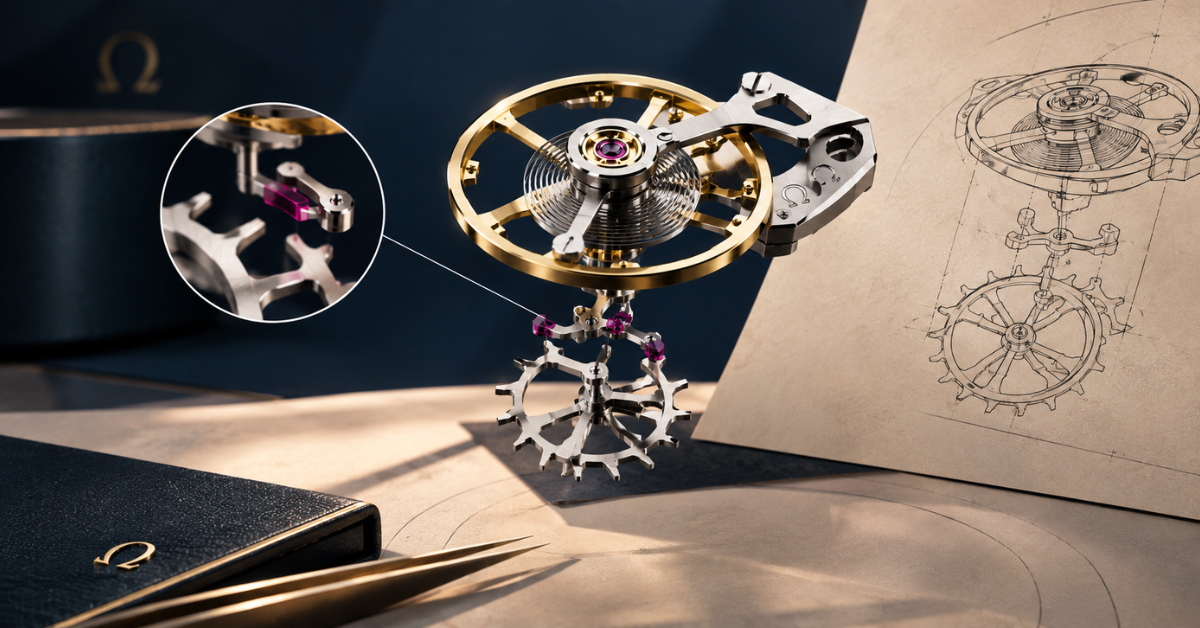
That longer interval isn't arbitrary. It traces directly to the Co-Axial escapement, developed with watchmaker George Daniels and standard across current Omega movements, which reduces friction between the parts that regulate timekeeping compared to the traditional Swiss lever escapement most other brands still use. Less internal friction means the lubricants inside age more slowly before needing to be replaced, which is the actual mechanical reason Omega can responsibly recommend a longer gap between services rather than just quoting a friendlier number. Current Master Chronometer movements also resist magnetic fields up to 15,000 gauss, independently verified by METAS — a factor that indirectly supports longevity too, since magnetic interference is one of the more common causes of a mechanical watch running poorly enough to need early attention. Our coverage of the Aqua Terra and in our Omega vs Rolex comparison both touch on how this magnetic resistance functions as a real, checkable engineering advantage rather than a spec-sheet number.
Real-World Evidence, Not Just Policy
Stated intentions are one thing; decades of actual ownership are more convincing. Omega guarantees parts availability for a minimum of 20 years after a given model goes out of production — twice the minimum window some comparable Swatch Group brands commit to for their own catalogs. In practice, Omega's own service network has serviced movements considerably older than that guarantee technically requires; watch forums and collector communities regularly document Omega calibers from the 1960s still being actively serviced with available parts, well beyond any formal guarantee window.
This isn't unusual for well-maintained examples. Owners regularly report Constellation references from the 1970s and 1980s still running accurately after consistent servicing, and vintage Omega calibers dating to the mid-20th century remain serviceable today specifically because the brand has maintained parts production and technical documentation across that span. A well-cared-for Omega genuinely is a multi-generational object in a way that's rare outside a handful of comparable Swiss manufacturers.
Quartz Omega: A Different Maintenance Pattern, Similar Longevity
Mechanical longevity gets most of the attention, but Omega's quartz models deserve equal treatment here, since they're genuinely durable in their own right. A quartz Omega typically needs a new battery every 2 to 5 years, signaled by an end-of-life indicator — the second hand begins jumping in visible increments rather than sweeping normally, giving clear warning before the watch actually stops.
Beyond the battery, quartz movements have fewer moving parts prone to mechanical wear than automatics, and with the same basic care — avoiding magnets, extreme temperatures, and prompt battery replacement once the EOL indicator appears — a quartz Omega can genuinely last decades, just through a different maintenance rhythm than its mechanical siblings.
What Actually Shortens an Omega's Lifespan
The "lifetime" claim is conditional, and it's worth being direct about what actually voids it in practice. Ignoring the signs a watch needs service is the most common failure point: noticeable inaccuracy, a mechanical watch stopping overnight despite a full day of wear, or a power reserve that depletes unusually fast after manual winding are all signals worth acting on rather than dismissing. Left unaddressed, degraded lubrication increases internal friction and accelerates wear on components that would otherwise last decades.
Beyond servicing itself, the everyday habits matter more than most owners assume: rinsing the case after saltwater exposure, avoiding sustained proximity to strong magnetic sources, keeping the watch away from extreme temperature swings, and getting water resistance checked annually if the watch sees regular water exposure. None of this is complicated, but skipping it consistently is exactly how a watch built to last generations ends up needing early, avoidable repair instead.
Does Longevity Affect What a Watch Is Actually Worth Owning?
A watch's realistic lifespan is part of the ownership equation, not just a technical curiosity — it factors into what you're actually paying for over time, not just at the point of sale. Our coverage on how Omega compares to Rolex on value retention touches on this from the resale side; a mechanically durable watch with strong long-term parts support is a meaningfully different purchase than one without that backing, even when the sticker prices look similar. If you're weighing a specific model with long-term ownership in mind, our Omega Watches Buying Guide covers how that consideration should factor into which reference actually makes sense for you.
FAQ
Does Omega really recommend servicing every 5 to 8 years? Yes — that's Omega's official published guidance, longer than the 3-to-5-year interval common at many comparable Swiss brands, made possible largely by the Co-Axial escapement's reduced internal friction.
How long do Omega watches actually last with proper care? Genuinely a lifetime or longer for many owners — Omega guarantees parts availability for at least 20 years after a model is discontinued, and well-documented examples from the 1960s and earlier remain serviceable today.
How often does an Omega quartz battery need replacing? Roughly every 2 to 5 years, signaled by an end-of-life indicator where the second hand begins jumping in visible increments rather than sweeping smoothly.
What shortens an Omega's lifespan the most? Ignoring early signs of needed service — noticeable timekeeping inaccuracy or unusual power reserve loss — along with skipping annual water resistance checks and exposing the watch to strong magnets or extreme temperatures.
Are Omega quartz watches as durable as automatics? Yes, in terms of overall lifespan — they have fewer mechanically wearing parts than automatics and can last decades with routine battery replacement and the same basic care.
Conclusion
"Designed to last a lifetime" holds up better under scrutiny than most brand claims of its kind — backed by a genuine engineering reason for Omega's longer service interval, a real 20-year parts guarantee, and decades of documented ownership history to match. The condition attached is straightforward but real: that lifetime depends on actual care, not just the watch sitting on a wrist. Treat the signs of needed service seriously, stick to the recommended interval, and an Omega bought today has a genuinely realistic shot at outlasting the person who bought it.
Senior Watch Writer
James Whitfield
James has spent over a decade covering Swiss horology, vintage markets and modern releases. He believes the best watch is the one you actually wear.