On this page
- Same Family, Very Different Watches
- At a Glance: Dark Side of the Moon vs Moonwatch
- Speedmaster Dark Side of the Moon
- Speedmaster Moonwatch Professional
- Design: Classic Tool Watch vs Modern Statement
- The Moonwatch
- The Dark Side of the Moon
- Ceramic: The Big Selling Point
- Movement: Automatic vs Hand-Wound
- Size and Comfort
- Heritage: The Moonwatch's Trump Card
- Price and Value
- Resale
- Running Costs
- So, Is the Dark Side of the Moon Worth It?
- Buy the Dark Side of the Moon If...
- Buy the Moonwatch If...
- Other Speedmasters Worth Considering
- Buying Tips
- Frequently Asked Questions
- How much is the Omega Speedmaster Dark Side of the Moon?
- What is the difference between the Dark Side of the Moon and the Moonwatch?
- Is the Dark Side of the Moon automatic?
- Does the Dark Side of the Moon scratch?
- Is the Dark Side of the Moon too big?
- Does the Dark Side of the Moon hold its value?
- The Bottom Line
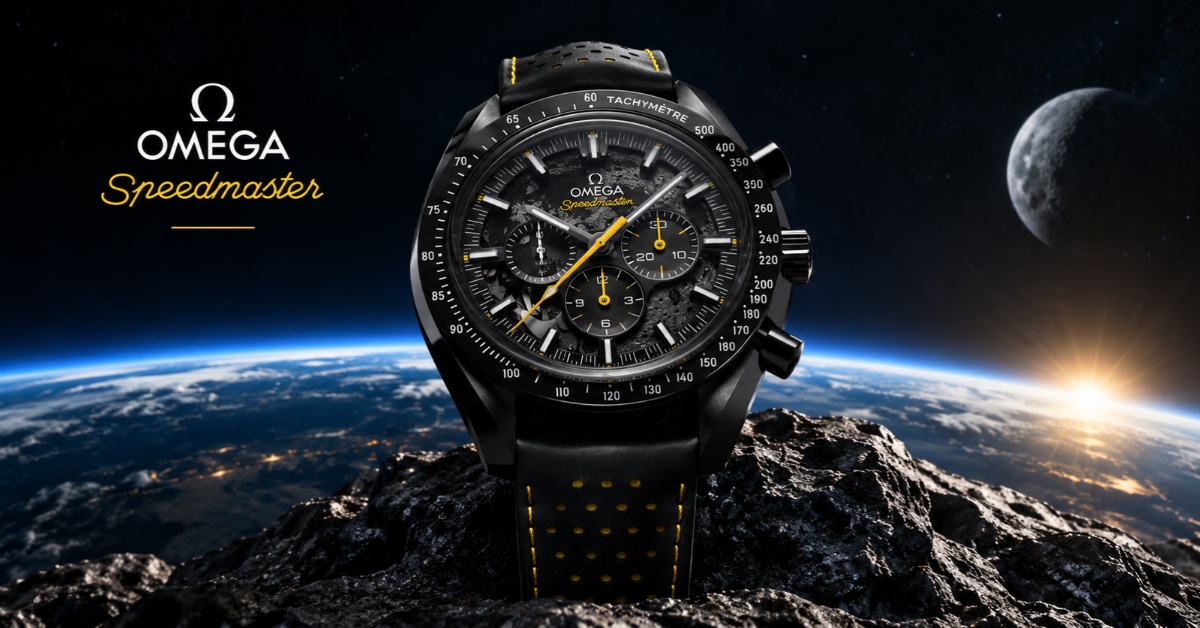
Same Family, Very Different Watches
The Moonwatch is the Speedmaster everyone knows: steel case, black dial, white hands and a story that ends on the surface of the Moon. Change almost nothing, and you have one of the most famous watches ever made.
The Speedmaster Dark Side of the Moon takes the opposite approach. Since its launch in 2013, it has reimagined the Speedmaster in black ceramic, with a bigger case, a darker look and more modern technology. It's the Speedmaster for people who want something nobody will mistake for a standard Moonwatch.
The question is whether it's worth paying roughly twice as much. Here's an honest, side-by-side look.
At a Glance: Dark Side of the Moon vs Moonwatch
Speedmaster Dark Side of the Moon
- Price: about $15,700 to $16,100 depending on the version
- Case: 44.25mm black (or grey) ceramic, about 13mm thick, about 50mm lug-to-lug
- Lug width: 21mm
- Bezel: ceramic with a Liquidmetal tachymeter scale
- Movement: mostly the automatic Co-Axial Master Chronometer calibre 9900, 60-hour power reserve
- Water resistance: 50m
- Caseback: sapphire display back
- Strap: usually rubber or leather
Speedmaster Moonwatch Professional
- Price: about $7,800 (hesalite); more with a sapphire crystal
- Case: 42mm steel
- Movement: hand-wound Co-Axial Master Chronometer calibre 3861, about 50-hour power reserve
- Water resistance: 50m
- Bracelet: steel bracelet as standard
- Heritage: the watch flight-qualified by NASA and worn on the Moon
For full Moonwatch pricing, including the sapphire version, see our Speedmaster Moonwatch price guide.
Design: Classic Tool Watch vs Modern Statement
The Moonwatch
The Moonwatch looks almost exactly as it did in the 1960s. Steel case, matte black dial, white sub-dials and an aluminium tachymeter bezel. It's understated enough to wear with anything, and anyone who knows watches recognises it instantly.
The Dark Side of the Moon
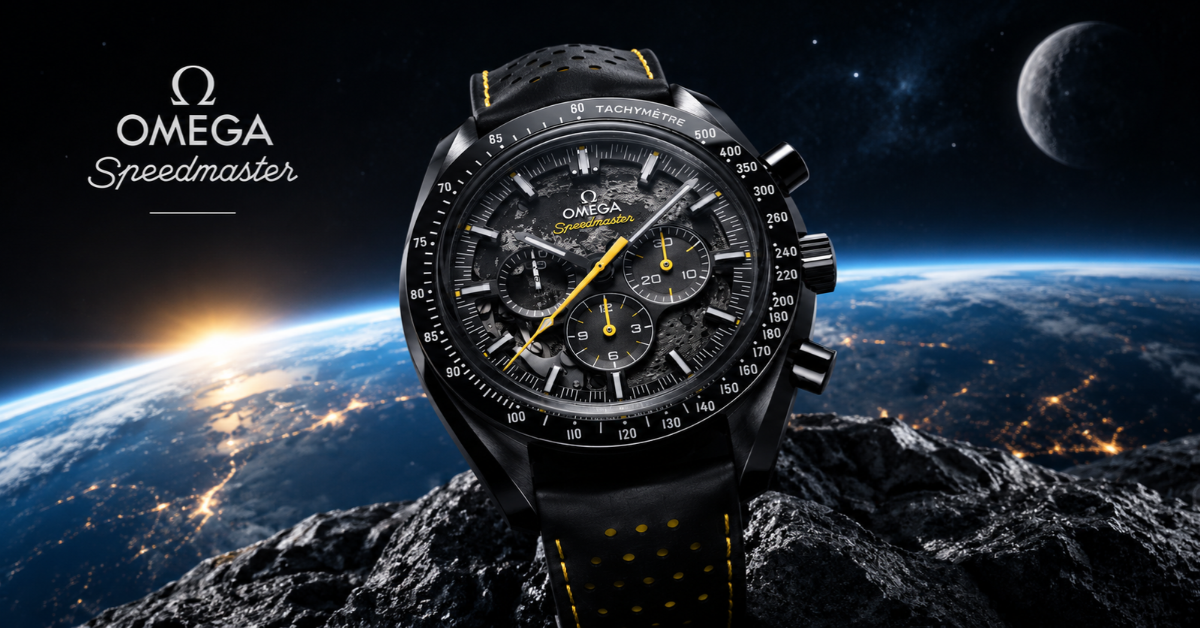
The Dark Side is all black: case, bezel and dial, often with subtle contrasting details on the hands and markers. The ceramic case has a deep, almost liquid finish that looks completely different from steel. It's bolder and more modern, and it reads as a statement piece rather than a tool watch.
There are several versions, including the all-black "Black Black," a grey ceramic version and coloured accents. The most dramatic is the Apollo 8 (ref. 310.92.44.50.01.001), with a skeletonised dial and a movement decorated to look like the lunar surface.
Verdict: purely a matter of taste. The Moonwatch is timeless; the Dark Side is striking.
Ceramic: The Big Selling Point
The Dark Side's ceramic case is its main difference, and it has real advantages:
- Scratch resistance: ceramic is far harder than steel, so the case won't collect the fine scratches a steel Moonwatch picks up.
- Colour that lasts: the black won't fade or wear through like a coating can.
- Lighter than it looks: despite its size, a ceramic case feels lighter than you'd expect.
But there are trade-offs too:
- It can crack or chip from a hard impact, where steel would only dent.
- It can't be polished back to new like a steel case.
- Repairs can be expensive if a case part needs replacing.
We cover the same pros and cons for Omega's white ceramic diver in Omega's white ceramic Diver 300M.
Movement: Automatic vs Hand-Wound
This is one of the biggest practical differences.
- Dark Side of the Moon: most versions use the calibre 9900, an automatic column-wheel chronograph with a 60-hour power reserve. It winds itself as you wear it.
- Moonwatch: uses the calibre 3861, a hand-wound chronograph descended from the movement NASA's astronauts relied on. You wind it by hand every day or two.
Both are Co-Axial Master Chronometers, certified by METAS for accuracy and resistance to magnetic fields up to 15,000 gauss. If you want the background, here's how Omega's Co-Axial escapement changed watchmaking.
Some special versions, like the Apollo 8, use hand-wound movements instead. If automatic winding matters to you, check the reference before buying.
Verdict: the Dark Side wins for convenience. The Moonwatch wins for authenticity: its hand-wound movement is a direct link to the Apollo missions.
Size and Comfort
At 44.25mm wide with a lug-to-lug of about 50mm, the Dark Side is a big watch. On wrists over about 7.25 inches, it looks bold and balanced. On smaller wrists, it can overhang and feel oversized.
The Moonwatch, at 42mm, fits a much wider range of wrists. If you have a smaller wrist or wear shirts with tight cuffs, it's the easier choice.
Verdict: the Moonwatch is more versatile; the Dark Side needs a larger wrist.
Heritage: The Moonwatch's Trump Card
This is where the Moonwatch can't be beaten. It's the watch NASA qualified for spaceflight and the one worn during the Apollo Moon landings. That history is a big part of why people buy a Speedmaster at all. Read why the Omega Moonwatch actually went to the Moon and the Speedmaster's Moon landing story.
The Dark Side of the Moon references space history, especially the Apollo 8 version, which honours the first crew to see the far side of the Moon. But it's a modern interpretation, not the watch that flew.
Verdict: if the NASA story matters to you, buy the Moonwatch.
Price and Value
- Moonwatch Professional: about $7,800
- Dark Side of the Moon: about $15,700 to $16,100
The Dark Side costs roughly twice as much. You're paying for the ceramic case, the larger size, the automatic movement on most versions, the display caseback and the exclusivity of a watch you'll rarely see on someone else's wrist.
Resale
Neither watch is an investment, and both lose value when resold. WatchCharts estimates the Apollo 8 Dark Side trades about 25% below its $16,100 retail price, at around $12,000. Standard Moonwatches typically sell well below retail too. Because the Dark Side costs so much more, the dollar amount you lose is usually larger. For the bigger picture, see Omega vs Rolex value retention.
There's a silver lining: a lightly used Dark Side of the Moon can be a good buy, offering a ceramic Master Chronometer for thousands less than new.
Running Costs
Both are chronographs, so servicing costs more than for a simple three-hand watch. Expect an official complete service in roughly the $750 to $1,200 range for Speedmaster chronographs, depending on the model. Here's what Omega servicing really costs.
So, Is the Dark Side of the Moon Worth It?
Buy the Dark Side of the Moon If...
- You want a bold, modern, all-black statement watch
- You love the scratch resistance and lasting colour of ceramic
- You prefer an automatic movement you don't need to wind
- You have a larger wrist, about 7.25 inches or more
- You already own a Moonwatch and want something completely different
Buy the Moonwatch If...
- It's your first Speedmaster
- The NASA and Apollo history matters to you
- You want a more versatile 42mm size
- You want the best value
- You enjoy the ritual of hand-winding
Our verdict: the Moonwatch is the better first Speedmaster and the better value. The Dark Side of the Moon is a brilliant second Speedmaster, or the right first one only if you specifically want a large ceramic statement piece.
Other Speedmasters Worth Considering
- Moonwatch Reverse Panda: a fresh take on the classic. See Reverse Panda vs Classic.
- Speedmaster '57: vintage looks with an automatic option. Read Speedmaster '57 vs Moonwatch.
- Speedmaster 38: a smaller automatic. Compare it in Speedmaster 38 vs Reduced.
For every option in one place, see the best Omega Speedmaster models.
Buying Tips
Buy from an Omega boutique, authorised dealer or reputable pre-owned seller. The Speedmaster is one of the most faked watches around, so read 9 checks to spot a fake Speedmaster and 3 questions to ask before buying a used Speedmaster. On a pre-owned Dark Side, inspect the ceramic case and bezel closely for chips, since they can't be polished out.
Frequently Asked Questions
How much is the Omega Speedmaster Dark Side of the Moon?
The Omega Speedmaster Dark Side of the Moon costs about $15,700 to $16,100 at US retail, depending on the version. The Apollo 8 model (ref. 310.92.44.50.01.001) is $16,100.
What is the difference between the Dark Side of the Moon and the Moonwatch?
The Dark Side of the Moon has a 44.25mm black ceramic case and, on most versions, an automatic calibre 9900 with 60 hours of power reserve. The Moonwatch has a 42mm steel case, a hand-wound calibre 3861 and the original NASA heritage, at about half the price.
Is the Dark Side of the Moon automatic?
Most Dark Side of the Moon models use Omega's automatic calibre 9900. Some special versions, such as the Apollo 8, use hand-wound movements, so check the specific reference.
Does the Dark Side of the Moon scratch?
Its ceramic case is highly scratch-resistant, far more than steel. However, ceramic can chip or crack from a hard impact and can't be polished like steel.
Is the Dark Side of the Moon too big?
At 44.25mm with a lug-to-lug of about 50mm, it suits wrists of about 7.25 inches and up. On smaller wrists, the 42mm Moonwatch is usually a better fit.
Does the Dark Side of the Moon hold its value?
Not especially. WatchCharts estimates the Apollo 8 version trades about 25% below retail. Like most Omegas, it's best bought to wear rather than as an investment.
The Bottom Line
The Moonwatch is the legend: smaller, simpler, cheaper and part of space history. The Dark Side of the Moon is the modern rebel: bigger, darker, tougher and far more exclusive.
If you only buy one Speedmaster, make it the Moonwatch. If you already love the Speedmaster and want one that stands completely apart, the Dark Side of the Moon is worth every bit of its premium.
Senior Watch Writer
James Whitfield
James has spent over a decade covering Swiss horology, vintage markets and modern releases. He believes the best watch is the one you actually wear.