On this page
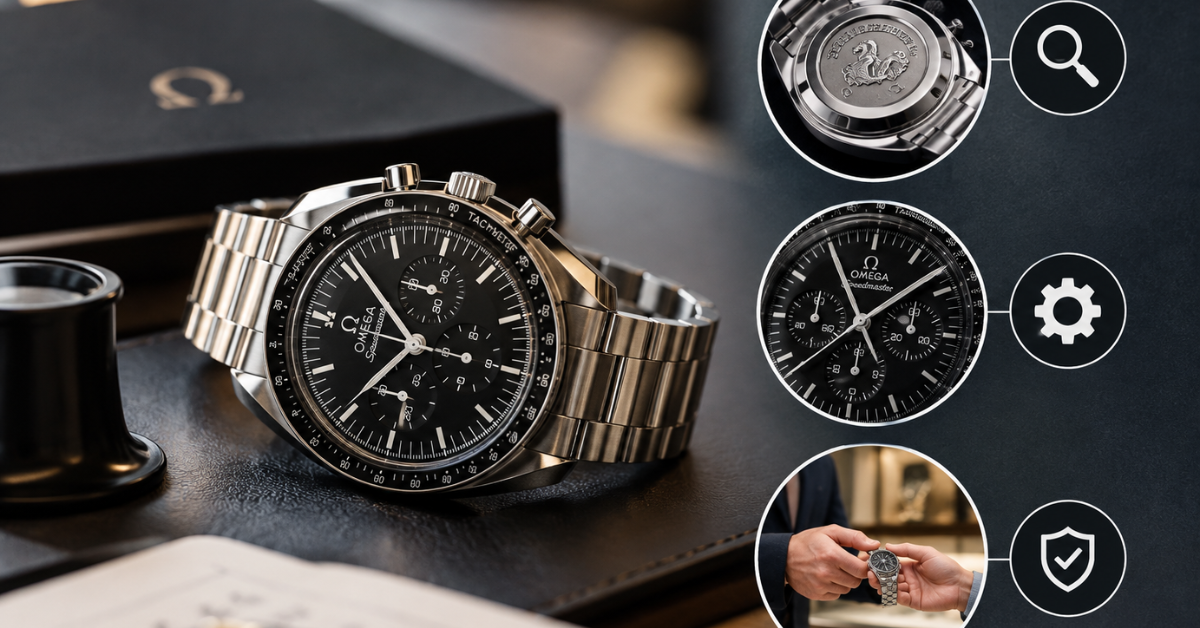
Before buying a used Omega Speedmaster, ask three things: which specific movement it actually has, since Caliber 3861 and the older 1861 differ in real ways beyond just an age gap; whether it's been serviced and whether that service is documented, since a decades-old chronograph movement genuinely needs periodic maintenance; and whether the case has ever been polished, since that affects both the sharpness of the original case lines and how the watch is valued by collectors. Authentication matters too, but these three questions settle whether you're getting fair value on a genuine watch, not just whether it's real.
Our Speedmaster-specific authentication guide covers how to confirm a Speedmaster is genuine. This is the next step—assuming it's real, these are the three questions that actually determine whether you're paying fair value for what you're getting.
1. Which Movement Does It Actually Have?
This matters more than most buyers realize, because "Speedmaster Professional" covers watches with genuinely different movements depending on when they were made, and the difference isn't just cosmetic.
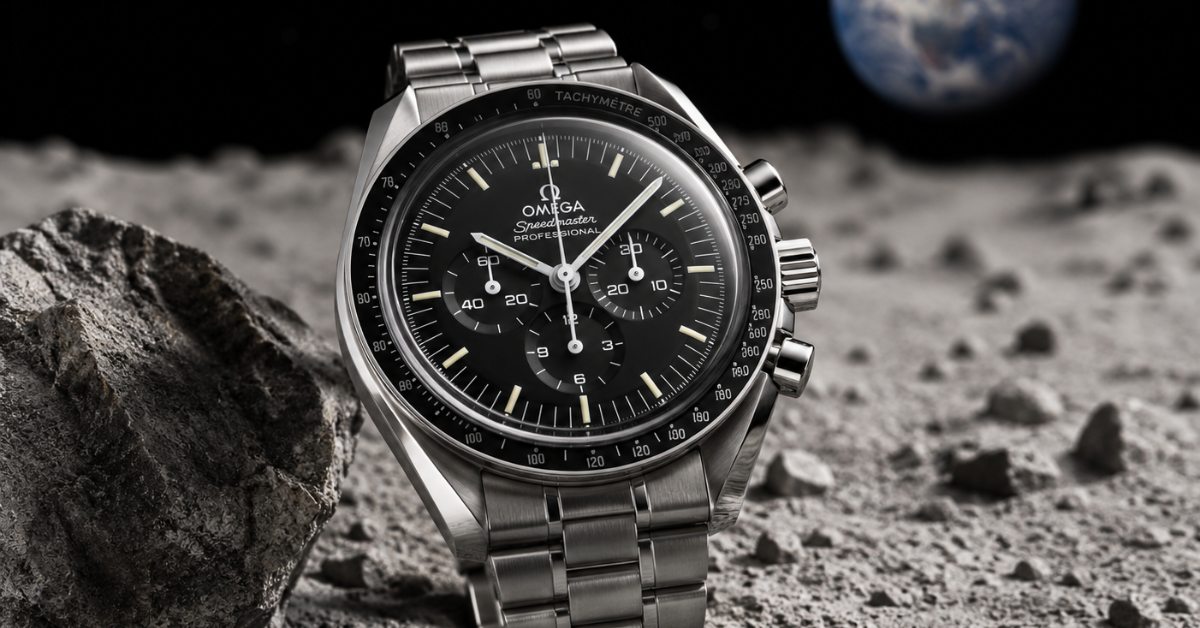
The current Moonwatch runs Caliber 3861, a Co-Axial Master Chronometer movement with METAS certification and 15,000-gauss magnetic resistance. The previous generation ran Caliber 1861 — also hand-wound, but without the Co-Axial escapement or Master Chronometer certification, running a simpler rhodium-plated finish at 21,600 vibrations per hour with a 48-hour reserve rather than the 3861's improved specification. Both are genuine, both are collectible, but they're not interchangeable in value or capability, and a seller who's vague about which specific caliber a watch actually has is worth pressing for a direct answer.
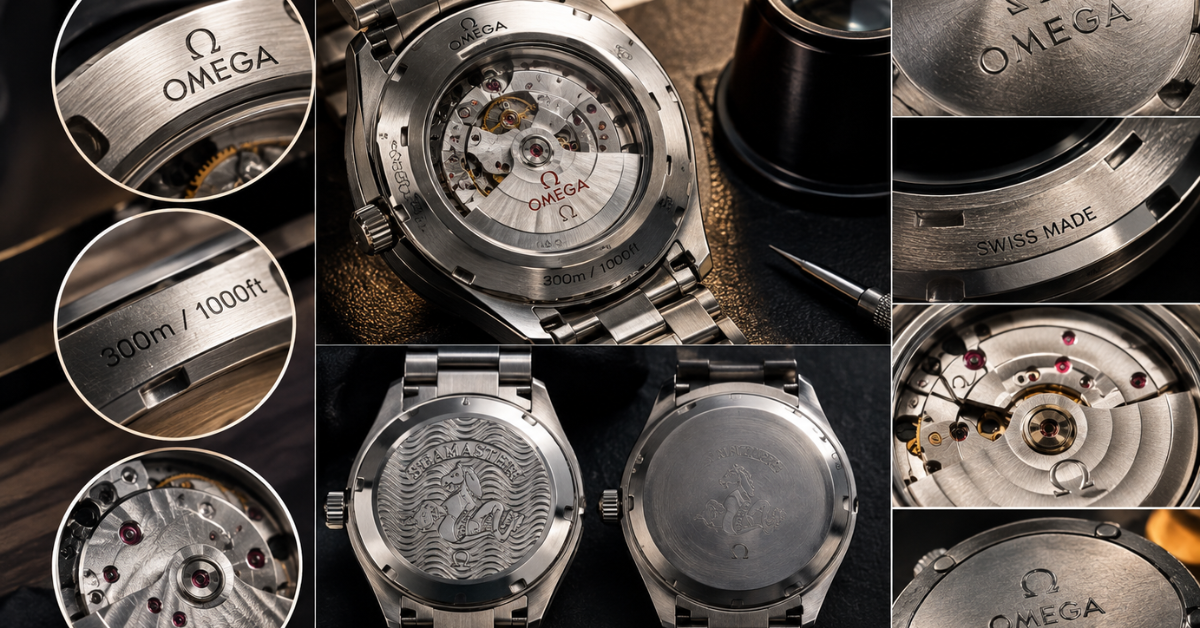
If the watch has a display caseback, you can often confirm this yourself by comparing the visible movement against reference photos for each caliber. Our Speedmaster Moonwatch Price Guide covers how hesalite and sapphire crystal choices interact with these movement generations, useful context for making sure the specific configuration you're being offered actually adds up.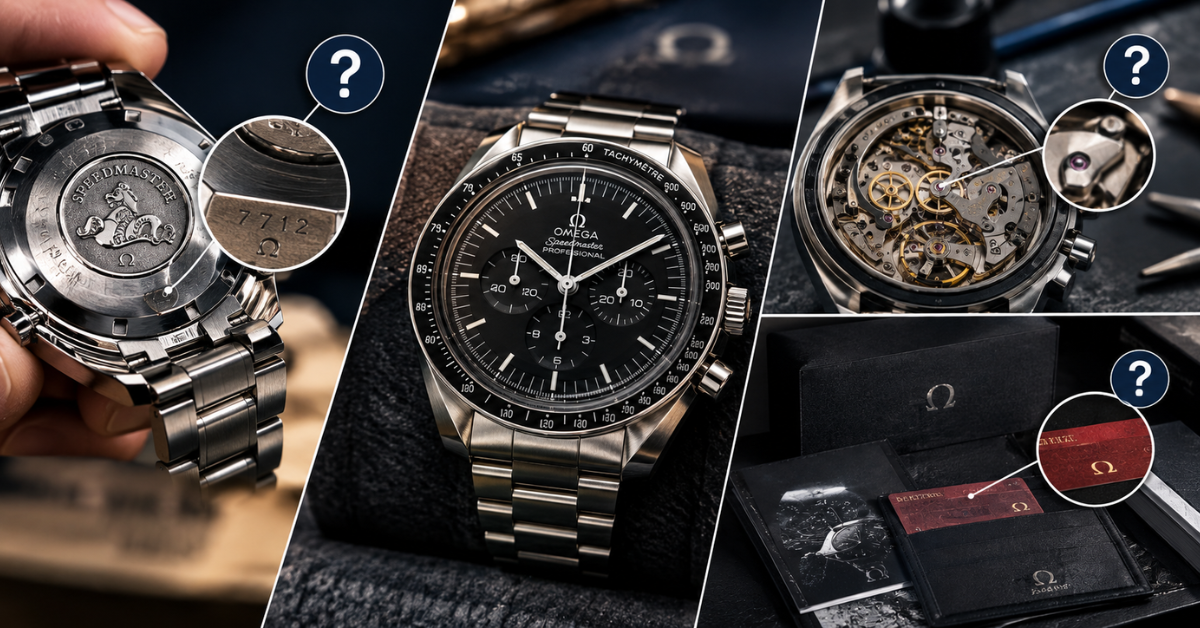
2. Has It Been Serviced, and Is There Documentation?
A hand-wound chronograph movement is genuinely mechanically active — every chronograph engagement involves real, moving components under load, more so than a simple time-and-date watch. Omega's own guidance recommends a full service every 5 to 8 years under normal use, and a used Speedmaster with no service history at all, especially one that's clearly some years old, is a real unknown rather than a minor gap in paperwork.
Ask directly: when was it last serviced, and is there a service record or receipt to back that up? A seller who can produce documentation from an authorized Omega service center gives you real confidence about the watch's mechanical condition. A seller who can't, or who seems unsure when it was last serviced at all, means you should factor a near-term service cost into your offer — a legitimate negotiating point, not just due diligence for its own sake.
3. Has the Case Been Polished?
This is the question most first-time used-watch buyers don't think to ask, and it genuinely affects both how the watch looks and what it's actually worth. Omega's original case finishing — the specific relationship between brushed and polished surfaces, the sharpness of the twisted lug edges that give the Speedmaster its distinctive silhouette — is permanently altered by any subsequent polishing. A watch that's been polished can still look great, sometimes even better superficially, but it's lost some of its original factory character in the process, and collectors specifically pay a premium for cases that haven't been touched.
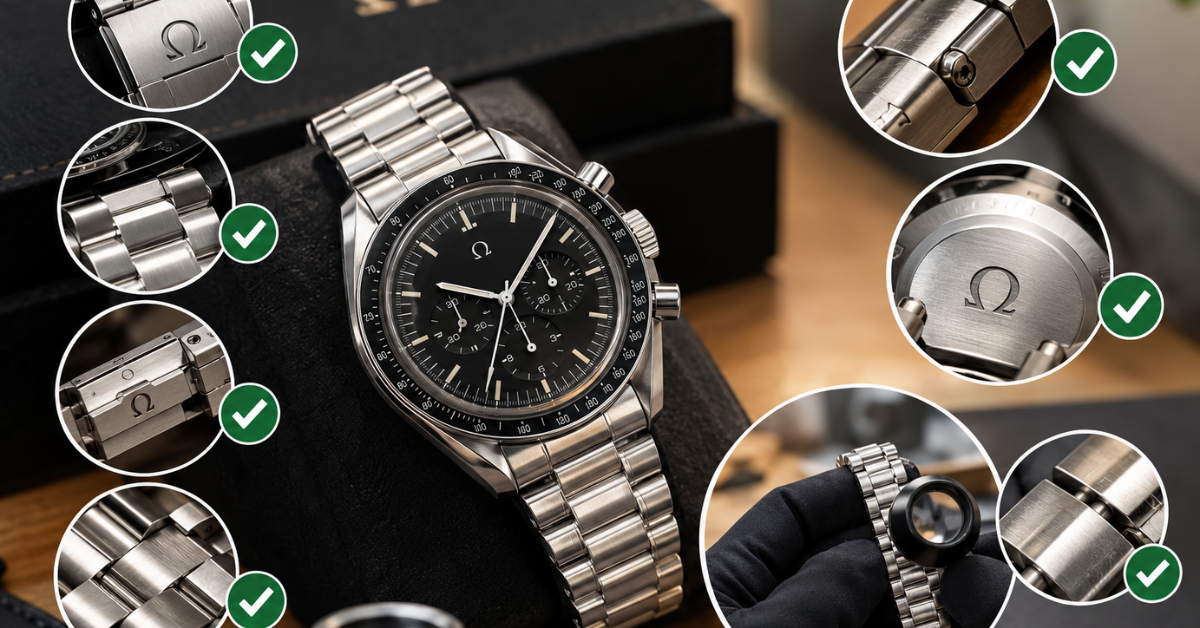
Ask the seller directly whether the watch has ever been polished, and look closely at the lug edges yourself — genuinely sharp, crisp lines suggest an unpolished case, while noticeably rounded or softened edges suggest it's been refinished at some point, whether or not the seller volunteers that information upfront. Neither answer should be a dealbreaker on its own, but it's a real factor in what a fair price actually looks like, and it's worth knowing before you negotiate rather than after you've already paid.
Why These Three, Specifically
Authentication settles whether the watch is real. These three questions settle whether you're paying the right price for what's actually in front of you — a distinction worth keeping separate, since a genuine Speedmaster with an undisclosed movement mismatch, no service history, and an unmentioned polish job is still a real Omega, just not necessarily worth what's being asked for it.
Buying With Confidence
Combine these three questions with the physical authentication checks covered in our Speedmaster-specific fake-spotting guide, and you've covered both whether the watch is genuine and whether the price actually reflects its real condition. Our Omega Watches Buying Guide covers additional fundamentals worth applying to any used purchase across Omega's broader catalog.
FAQ
Does it matter which Speedmaster movement a used watch has? Yes — Caliber 3861 offers Master Chronometer certification and improved magnetic resistance over the older Caliber 1861, and the two aren't interchangeable in value despite both being genuine Omega movements.
How often should a used Speedmaster have been serviced? Omega recommends a full service every 5 to 8 years under normal use; a used watch with no service history or documentation should factor a near-term service cost into your offer.
Does a polished case make a Speedmaster less valuable? Generally, yes, to collectors specifically — polishing permanently softens the original case lines, and unpolished examples with sharp factory edges typically command a premium over refinished ones.
Can I tell if a Speedmaster has been polished myself? Often, yes — look closely at the lug edges; genuinely sharp, crisp lines suggest an unpolished case, while noticeably rounded or softened edges suggest it's been refinished.
Should I still check authenticity if I'm asking these three questions? Yes — these questions address value and condition on a genuine watch, not authenticity, so they work alongside dedicated authentication checks rather than replacing them.
Conclusion
A genuine Speedmaster can still be a bad deal if you don't know which movement it has, whether it's been maintained, or whether its case still carries its original factory lines. Ask these three questions before you negotiate, not after you've already committed, and you'll know exactly what you're actually paying for.
Senior Watch Writer
James Whitfield
James has spent over a decade covering Swiss horology, vintage markets and modern releases. He believes the best watch is the one you actually wear.