On this page
- Speedmaster Professional Moonwatch — The One That Matters
- Speedmaster Dark Side of the Moon — Same Bones, Different Skin
- Speedmaster '57 — The Vintage-Proportioned Option
- Speedmaster Racing — Lighter, Louder, More Colorful
- Silver Snoopy Award — For Collectors Who Want a Story
- How to Actually Choose
- FAQ
- Where the Speedmaster Fits in Omega's Lineup
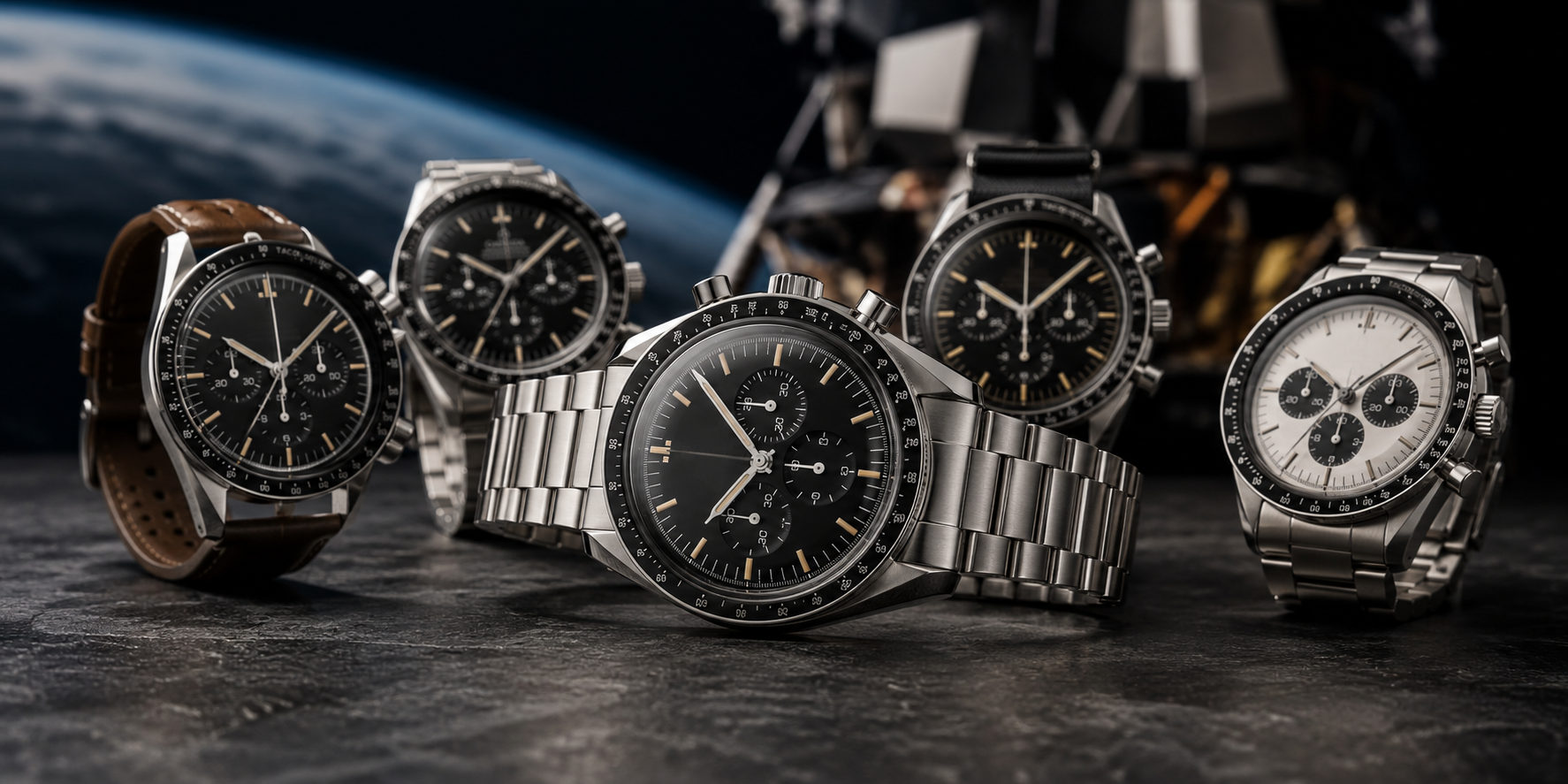
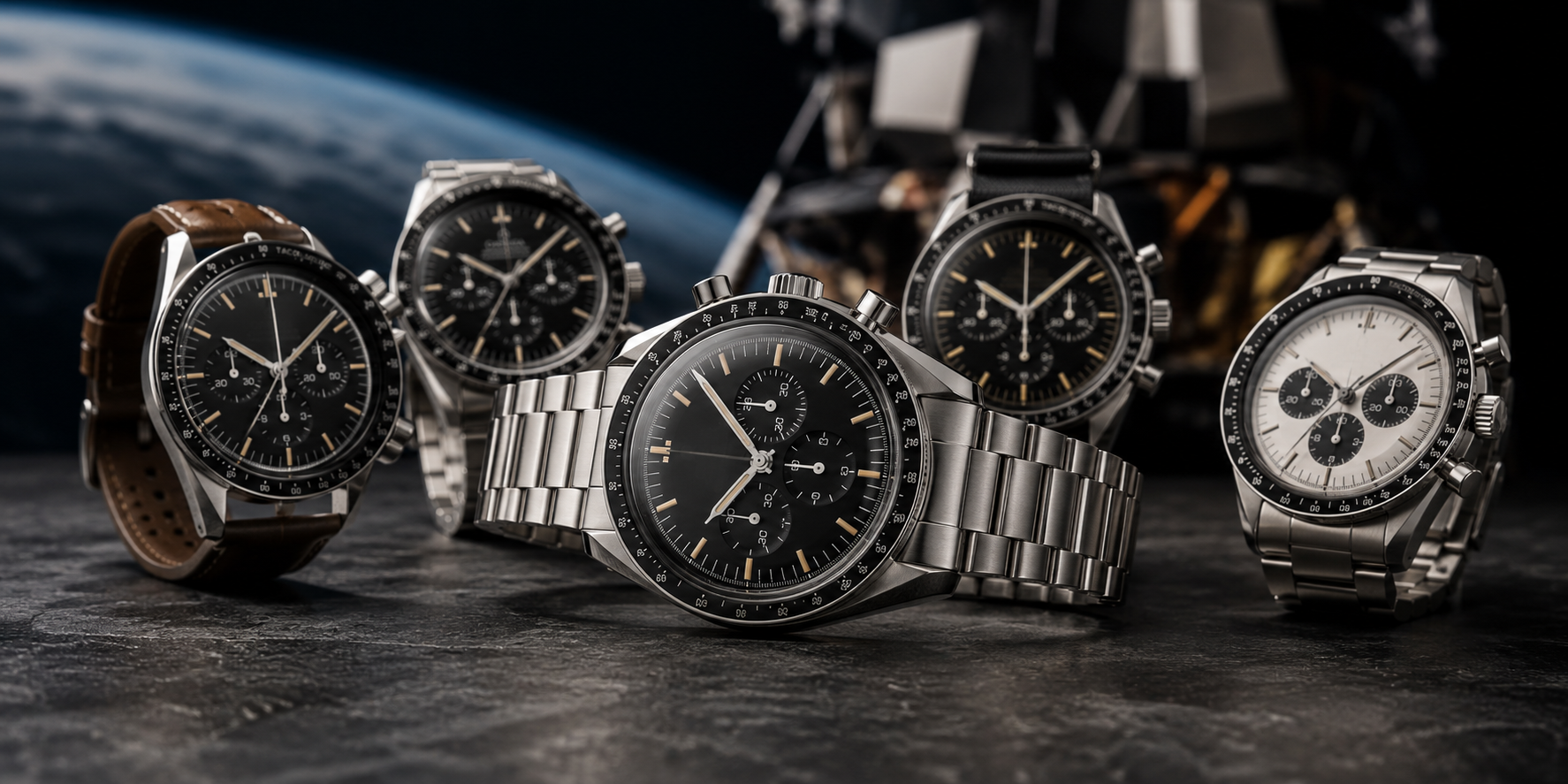
The best Omega Speedmaster models in 2026 are the Speedmaster Professional Moonwatch (Cal. 3861) for buyers who want the real NASA-flown design, the Dark Side of the Moon for an all-black ceramic take on the same shape, the Speedmaster '57 for a vintage-proportioned daily wearer, and the Speedmaster Racing for a lighter, more colorful chronograph. Collectors chasing something rarer should look at the Silver Snoopy Award editions. For most first-time buyers, the Hesalite Moonwatch on a steel bracelet, around $6,900–$7,300 retail, remains the reference to own.
Omega makes a lot of Speedmasters. Over twenty references just within the Moonwatch family alone, before you even get to Racing, Dark Side of the Moon, or the '57. That's genuinely confusing if you're trying to buy one — so this guide skips the marketing copy and tells you which models are actually worth your money in 2026, and why.
We're not affiliated with Omega. No boutique sent us these watches. These are picks based on what the Speedmaster line actually offers, at current 2026 pricing.
Speedmaster Professional Moonwatch — The One That Matters
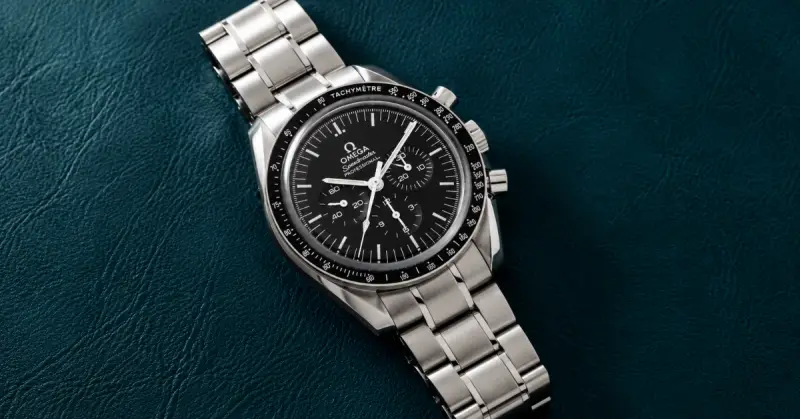
If you buy one Speedmaster in your life, it's probably this one. The Moonwatch is the reference that flew on Apollo missions, the watch Buzz Aldrin wore on the lunar surface, and — remarkably — it hasn't changed all that much since. Same 42mm steel case, same stepped dial, same tachymeter bezel with the "dot over ninety" detail collectors look for.
Current production runs on the Caliber 3861, a Master Chronometer movement certified to +0/−2 seconds a day and resistant to magnetic fields up to 15,000 gauss. That's a real upgrade over the old 1861, which was accurate but nowhere near as tough.
You've got two main crystal choices here, and it's more than a cosmetic decision:
- Hesalite (acrylic) — the historically correct choice, closed caseback, roughly $6,900–$7,300 retail. Scratches easier, but it's shatterproof and can be polished back to new with a bit of toothpaste and a cloth. Purists lean this way.
- Sapphire — scratch-resistant, display caseback so you can see the movement, around $7,600–$9,100 depending on the reference. Slightly thicker case at 14.3mm versus 13.5mm.
Neither is wrong. Buy sapphire if you want to see the movement and never think about the crystal again. Buy Hesalite if you want the watch as it was actually worn on the Moon.
Omega also kicked off 2026 with a reverse-panda Moonwatch — glossy black upper dial plate over a white sub-counter base, available in steel (around $10,400) or 18K Moonshine Gold (around $49,300). It's striking, and honestly one of the more distinctive Speedmaster releases in years, but it's not the watch to start with if this is your first Moonwatch.
Already own a Seamaster and weighing it against the Speedmaster? Our Seamaster Diver 300M review breaks down how the two Omega icons actually differ in daily wear.
Speedmaster Dark Side of the Moon — Same Bones, Different Skin
Take the Moonwatch's case shape and movement architecture, then execute the whole thing in black zirconium oxide ceramic. That's the Dark Side of the Moon in one sentence. It's stealthier, it wears a bit heavier, and it draws attention in a way the steel Moonwatch simply doesn't.
This one's for buyers who already know they love the Speedmaster silhouette but want something less traditional. It's not a replacement for the Moonwatch — think of it as the sibling that took a different career path.
Speedmaster '57 — The Vintage-Proportioned Option
Named for the year the Speedmaster launched, the '57 borrows cues from those early references: a slightly domed case, a more compact 40mm diameter on some variants, and dial layouts that echo mid-century motorsport chronographs. It's smaller and lighter on the wrist than the Moonwatch, which matters if you've got a 6-inch wrist or you just find 42mm a bit much.
Prices start lower too — new examples from around $4,700, with pre-owned pieces dipping further. It won't carry the same lunar cachet as the Professional, but it's arguably the more comfortable everyday watch.
Speedmaster Racing — Lighter, Louder, More Colorful
The Racing line trades the Moonwatch's black-and-steel austerity for splashes of color on the subdial rings and minute tracks, plus a slightly sportier case treatment. It leans into motorsport rather than space travel — which, honestly, is closer to the Speedmaster's original 1957 purpose as a driver's chronograph before NASA ever got involved.
If the Moonwatch feels too serious for your taste, the Racing is worth a look. It's the same DNA in a different mood.
Silver Snoopy Award — For Collectors Who Want a Story
Omega releases these periodically to commemorate NASA's Silver Snoopy Award, given to the brand after the Apollo 13 crew made it home safely with help from a reliable Speedmaster. The cartoon beagle shows up on the 9 o'clock subdial, and the caseback carries a mechanized scene that animates when you run the chronograph.
These aren't cheap. The most recent 50th Anniversary reference trades in the $14,000–$17,000 range depending on condition and set. But they hold their value unusually well, and among Speedmaster collectors, a Snoopy on the wrist gets noticed immediately. Not a first watch. A very good third or fourth one.
How to Actually Choose
Ask yourself what you want the watch to do:
- You want the "real" astronaut watch, full stop. Get the Hesalite Moonwatch, ref. 310.30.42.50.01.001. It's the reference every other Speedmaster gets measured against.
- You want scratch resistance and don't care about historical purity. Go sapphire.
- You want something smaller or more casual. The '57 wears the best of the bunch.
- You want to stand out at a watch meetup. Dark Side of the Moon or the reverse panda.
- You're buying your third Speedmaster and money's less of an object. Silver Snoopy.
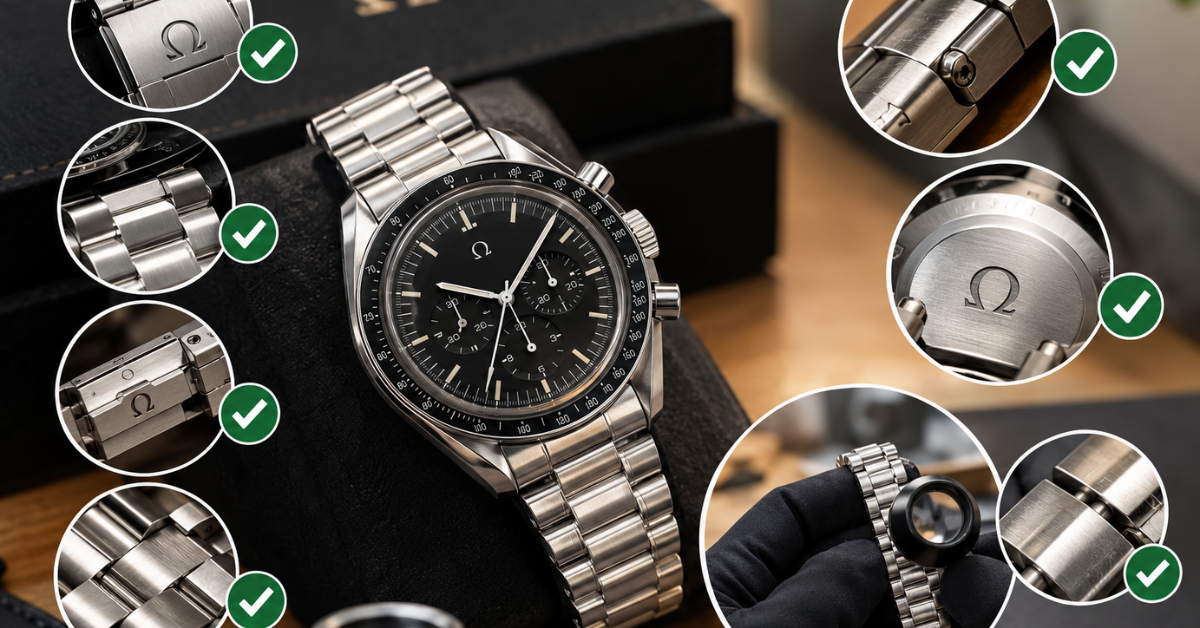
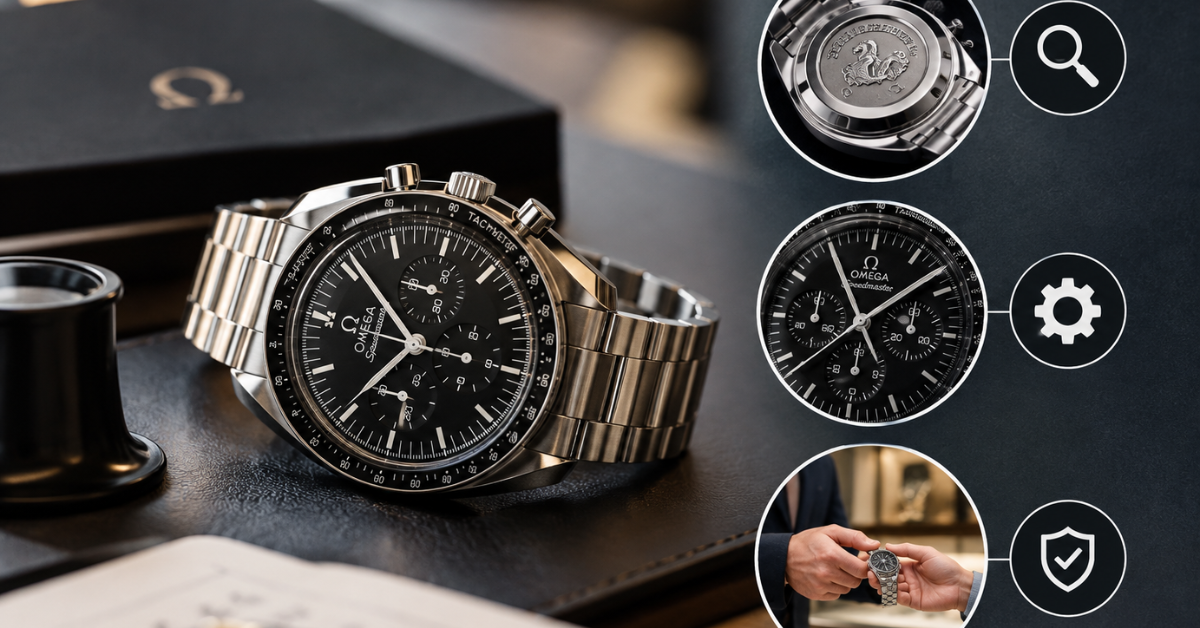
Whatever you land on, buy from an authorized dealer or a reputable pre-owned platform, and always check the paperwork. Speedmasters get faked often enough that it's worth the extra ten minutes.
If you're new to the brand more broadly, our Omega watches buying guide covers collections, movements, and pricing across the whole lineup — not just the Speedmaster.
FAQ
What is the best Omega Speedmaster model to buy first? The Speedmaster Professional Moonwatch on Hesalite, ref. 310.30.42.50.01.001, is the model most Speedmaster owners recommend first. It's the closest thing to the watch that actually went to the Moon, and it holds its value better than most references in the line.
How much does an Omega Speedmaster Moonwatch cost? The current Hesalite Moonwatch retails around $6,900–$7,300, while the sapphire version runs $7,600–$9,100. Special editions like Silver Snoopy or gold Moonwatches climb well past $15,000.
Is the Omega Speedmaster a good investment? It holds value reasonably well and rarely craters, but it doesn't appreciate the way a Rolex Daytona does. Buy it because you want to wear it, not as a speculative asset.
What's the difference between the Speedmaster Professional and the Speedmaster Reduced? The Professional Moonwatch is hand-wound, NASA-flight-qualified, and carries the historic caliber lineage. The Reduced is a smaller, automatic chronograph that never went to space — it's a different watch that borrows the Speedmaster name and looks.
Hesalite or sapphire crystal — which should I choose? Hesalite is historically accurate, shatterproof, and easy to polish, but scratches more easily. Sapphire resists scratches and shows off the movement through a display caseback, at a price premium and slightly thicker case.
Are Omega Speedmasters worth buying pre-owned? Yes, often more so than buying new. Standard Moonwatch references frequently trade 15–30% below retail in excellent condition. Just verify authenticity carefully before you commit — our fake Omega authentication guide walks through the checks worth doing.
Where the Speedmaster Fits in Omega's Lineup
The Speedmaster isn't Omega's only serious collection, and it's not always the right fit. If you want something built for the water instead of the vacuum of space, the Seamaster is the better call. If dress-watch elegance matters more to you than chronograph function, the Constellation deserves a look too — our Constellation review for 2026 covers where it stands against the rest of the range. And if budget is the real constraint, our best Omega watches under $5,000 roundup includes a couple of Speedmaster references that slot in comfortably below the flagship Moonwatch price point — while Omega watches under $20,000 covers where the Snoopy and gold references land.
None of this makes the Speedmaster less worth owning. It just means it's one very good answer among several, depending on what you actually want from the watch on your wrist.
Reviews Editor
Sofia Marchetti
Sofia focuses on dive watches, chronographs and everyday wearability, testing every piece in real-world conditions before forming a verdict.