On this page
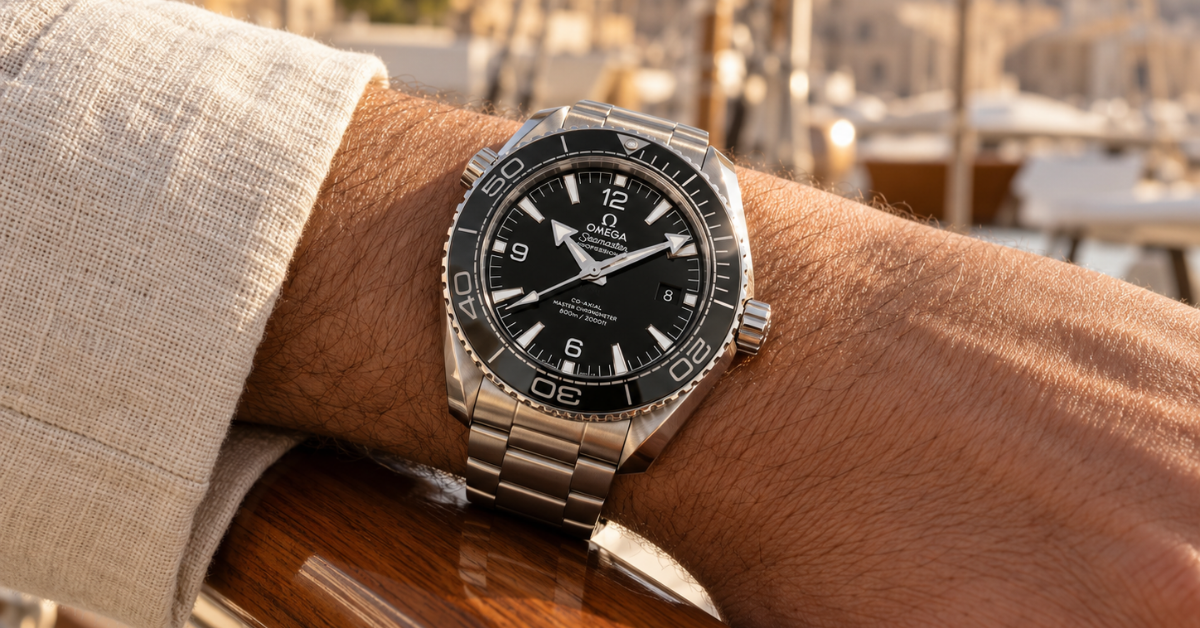
Most people notice a Liquidmetal bezel before they know what to call it — a bright, silvery number or scale sitting in sharp contrast against a glossy ceramic background, looking almost like it was poured in rather than printed on. That's close to exactly what happened. Here's the plain-language version of how, and why it matters.
What "Amorphous Metal" Actually Means
Most metals, as they cool from a molten state, arrange their atoms into a neat, repeating, ordered pattern — a crystalline structure, similar to how a stack of bricks lines up in orderly rows. Liquidmetal is different. It cools fast enough that its atoms never get the chance to organize into that ordered arrangement, locking instead into a disordered, glass-like structure — which is why it's technically classified as a bulk metallic glass rather than a conventional metal alloy.
That structural difference isn't just a curiosity. It's the actual reason Liquidmetal behaves the way it does: notably harder than standard metals, genuinely resistant to corrosion, and — critically for how Omega uses it — considerably more moldable when heated than a normal crystalline metal would be, letting it flow into extremely fine detail before it sets.
What It's Actually Made Of
Omega's own materials documentation describes Liquidmetal as an alloy of titanium, zirconium, and copper. It's roughly three times as hard as stainless steel, a genuine, measurable difference rather than a marketing exaggeration — and that hardness is what makes it such an effective, long-lasting material for the one job Omega actually uses it for: filling in engraved details on a ceramic bezel.
How Omega Actually Builds a Liquidmetal Bezel
This is worth walking through step by step, because the process itself is the real story here, not just the finished look.
It starts with ceramic, not metal. Omega forms a ring of zirconium oxide mixed with a plastic binder, then bakes it at around 1,000 degrees Celsius. That intense heat burns away the plastic entirely, leaving behind a fully hardened ceramic ring. That ring is then cut, polished, and laser-engraved with the bezel's numerals and minute scale — a precise process that takes roughly 15 minutes per bezel.
Here's where the Liquidmetal comes in. A thin, flat ring of the alloy is placed directly over the engraved ceramic and compressed into it using a combination of heat and pressure. Because of Liquidmetal's amorphous structure, it's genuinely elastic and workable at this stage, letting it seep directly into the tiny laser-cut engravings rather than simply sitting on top of the ceramic surface. Once it's bonded, Omega polishes away the excess — since ceramic is the harder of the two materials, that polishing step can be done aggressively without damaging the ceramic underneath, leaving Liquidmetal filling only the numerals and scale markings themselves, finished with a fine satin brush for contrast against the glossy ceramic background.
The result is a genuine metallurgical bond, not a coating or a printed layer sitting on top of the surface. That distinction is exactly why the numerals hold up the way they do.
Why This Actually Matters for Durability
A painted or printed bezel marking can wear away, fade, or chip over years of use — Liquidmetal, bonded directly into the ceramic through this process, doesn't share that vulnerability. It resists scratching thanks to its hardness, resists corrosion thanks to its chemical stability, and holds its color indefinitely rather than gradually fading the way some traditional bezel treatments do over decades of sun exposure and handling. It's a genuine long-term durability upgrade, not a cosmetic flourish.
A Real, Documented History
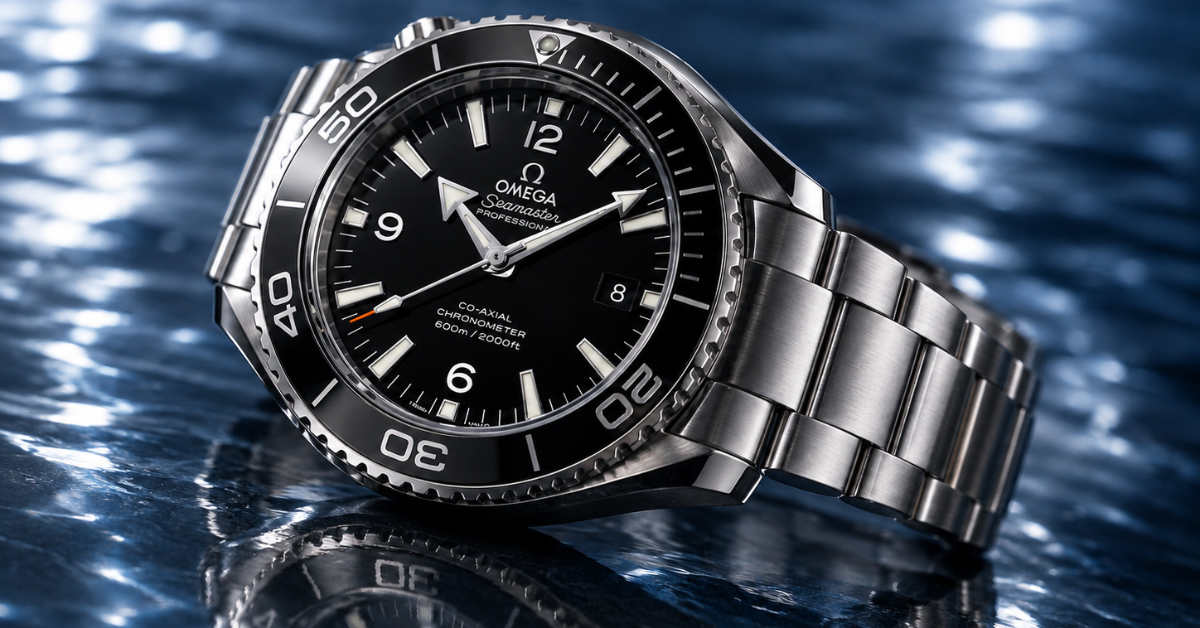
Omega first introduced the technology in October 2009, on a limited-edition Seamaster Planet Ocean built specifically to showcase it — a genuine "look what we can do" release rather than a mainstream product from day one. Omega went on to secure exclusive rights to use Liquidmetal in watchmaking, which is part of why you won't find the same technology, under that name, on watches from other brands.
Where You'll Find It Today
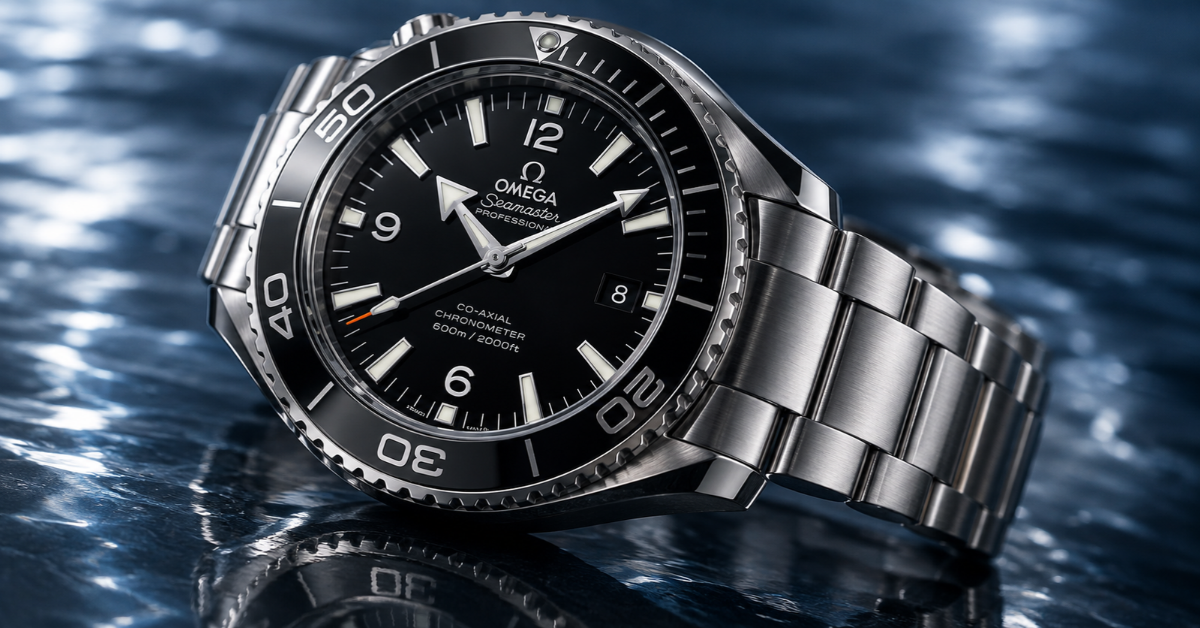
Liquidmetal remains part of Omega's current materials lineup, most associated with select Seamaster Planet Ocean references, where it's used for the bezel's diving scale against a ceramic background. Our full Planet Ocean review covers that watch's broader engineering in depth, and our coverage of the Constellation Observatory launch touches on how Liquidmetal fits alongside Omega's other proprietary materials in the current catalog, including the steel and gold alloys developed for that collection specifically.
If you're weighing a Liquidmetal-equipped watch against Omega's broader catalog, our Omega Watches Buying Guide covers how to navigate collections and materials more generally, and our Co-Axial escapement explainer covers another piece of Omega's engineering story in the same plain-language style as this one, if movement technology is what you're trying to understand next.
Why This Matters for Authentication, Too
Genuine Liquidmetal engraving has a specific, recognizable finish — crisp, evenly satin-brushed numerals sitting in sharp metallic contrast against the ceramic, with no visible seam where the two materials meet. Our general guide to spotting a fake Omega watch covers engraving and bezel authenticity checks more broadly — the kind of precision Liquidmetal engraving requires is genuinely difficult for a counterfeit to replicate cheaply.
FAQ
What is Omega's Liquidmetal actually made of? An alloy of titanium, zirconium, and copper, cooled in a way that produces a non-crystalline, glass-like atomic structure rather than the ordered structure most metals form.
How much harder is Liquidmetal than regular steel? Roughly three times harder than standard stainless steel, according to Omega's own materials documentation.
How does Omega actually get the Liquidmetal into the bezel? It's compressed under heat and pressure directly into laser-engraved numerals on a ceramic bezel, where its amorphous structure lets it flow into the fine detail before the excess is polished away.
When did Omega first introduce Liquidmetal? In October 2009, on a limited-edition Seamaster Planet Ocean built specifically to showcase the technology.
Which current Omega watches use a Liquidmetal bezel? It's most associated with select Seamaster Planet Ocean references, where it fills the ceramic bezel's diving scale.
Conclusion
Liquidmetal is one of those Omega details that looks purely decorative until you understand the actual chemistry and process behind it — a genuinely different kind of metal, cooled in a way that lets it bond directly into ceramic rather than sit on top of it, engineered specifically so the numbers on a dive bezel outlast everything else on the watch around them. It's a small detail with a surprisingly deep story, and now you know the whole thing.
Editor-in-Chief
Editorial Team