On this page
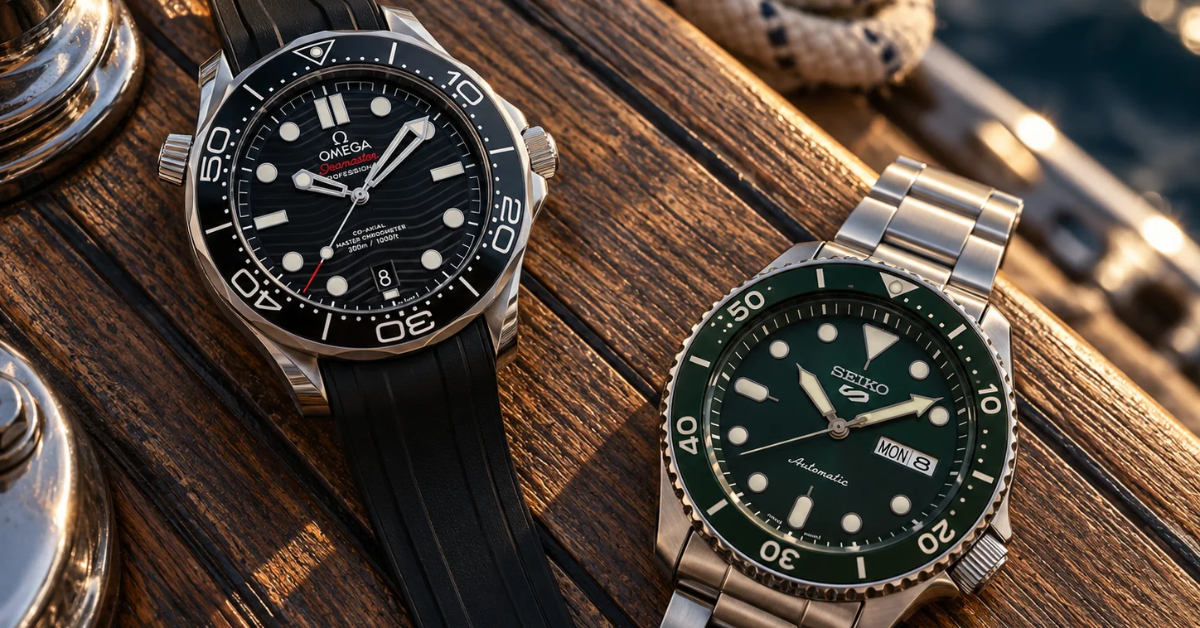
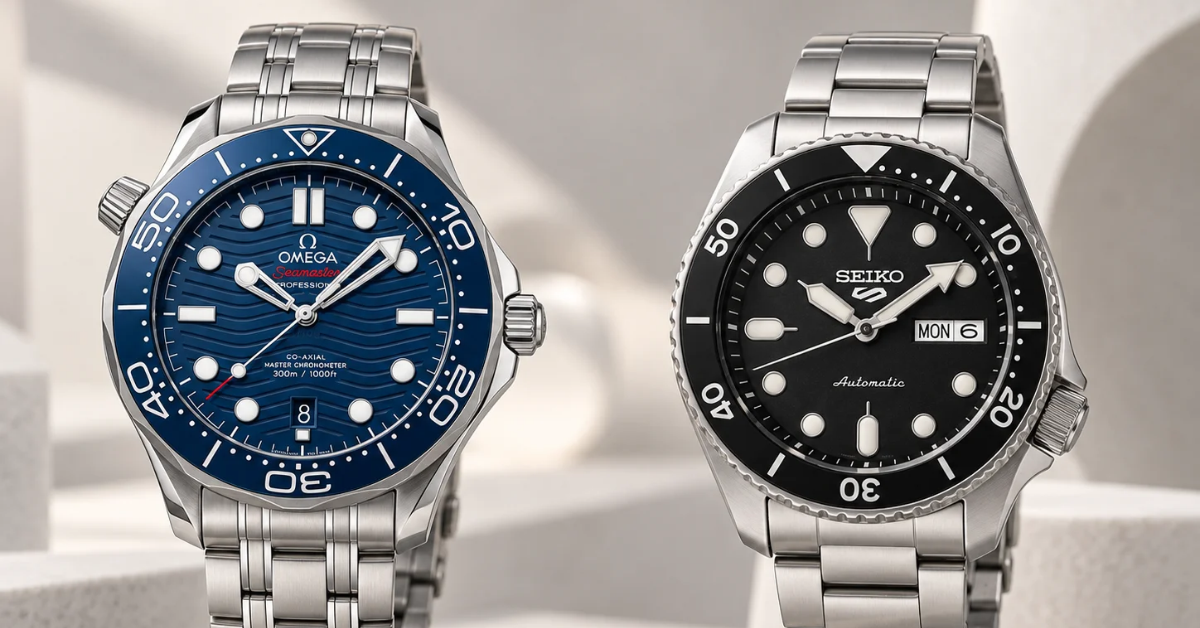
This comparison shows up constantly from people just starting to pay attention to watches, usually somewhere between "my Seiko looks kind of like a Bond watch" and "should I save up for the real thing." Both instincts are understandable. Neither is quite right, and the actual gap between these two watches is more informative than a simple verdict would suggest.
Where Each One Actually Comes From
The Diver 300M has carried real cultural weight since 1993, when its wave-pattern dial first appeared, and again in 1995 when Pierce Brosnan wore it in GoldenEye, beginning a three-decade partnership between Omega and the Bond franchise. Our Diver 300M review covers that full design evolution, including the significant 2018 update that brought the current ceramic dial and Master Chronometer movement.
Seiko's diving heritage runs independently and just as deep — the brand built genuine professional dive tools starting in the 1960s, developing its own case and bezel engineering long before any cross-brand comparison existed. The Seiko 5 specifically traces to 1963, built around five defining principles: automatic winding, a day-date display, water resistance, a recessed crown, and durable case construction. Some Seiko 5 references share visual cues — a rotating bezel, bold luminous markers — common across the entire dive-watch category, a shared design language the whole category evolved together rather than one brand copying another.
Movement: A Genuine Certification Gap
This is where the real difference lives, and it's worth being specific rather than vague about it. The Diver 300M runs Omega's Co-Axial Master Chronometer movement — Caliber 8800 or 8900 depending on the reference — independently tested by METAS, Switzerland's federal metrology institute, to resist magnetic fields up to 15,000 gauss and keep time within 0 to +5 seconds a day on the fully cased watch. Our Co-Axial escapement explainer covers how that movement's reduced-friction design also lets Omega recommend service intervals of 5 to 8 years rather than the 3 to 5 typical elsewhere.
The Seiko 5's 4R36 delivers a 41-hour power reserve with a published factory tolerance of +45/-35 seconds a day, though real-world examples commonly perform closer to plus or minus 10 to 15 seconds daily. It's a proven, widely serviced movement with a strong reliability track record — just tested and certified to a genuinely different standard than an independently verified Master Chronometer.
Materials and Water Resistance
The Diver 300M's bezel is ceramic, with the wave pattern laser-cut into the dial for real physical depth, paired with sapphire crystal throughout and a genuine helium escape valve — a functional component built specifically for saturation-diving decompression, not a design flourish. The Seiko 5 uses an aluminum bezel insert, which can fade or scratch with years of wear, and Hardlex, a scratch-resistant but genuinely softer mineral crystal than sapphire.
Water resistance follows the same pattern: 300 meters on the Diver 300M against 100 meters on the Seiko 5. Both numbers comfortably exceed what recreational swimming or snorkeling actually requires, so the practical difference shows up more in long-term material durability and daily handling feel than in any depth either watch is likely to see.
Price: A Real, Substantial Gap
Current Diver 300M pricing runs roughly $6,500 to $7,000. The Seiko 5 sits at $200 to $350. That's somewhere between 20 and 30 times the price, reflecting genuinely different manufacturing standards, independent certification, and brand positioning — not a premium-versus-budget gap in the way two watches from adjacent price tiers might compare.
So, Which Should You Actually Buy?
Neither answer makes the other a mistake.
- Want a genuinely reliable, low-risk introduction to automatic watches, without needing independent certification or precious-grade materials? The Seiko 5 delivers exactly what it promises, honestly, and the money you save is real money.
- Want a certified Master Chronometer movement, genuine saturation-diving engineering, and the design that's defined Omega's dive watch identity for three decades? The Diver 300M earns its price through real, independently verified standards, not just a recognizable name.
- Already own a Seiko 5 and wondering if the Diver 300M is the natural next step? For a lot of collectors, it genuinely is — starting with an accessible automatic and working toward something like the Diver 300M is one of the more common paths into this hobby, not a contradiction of it.
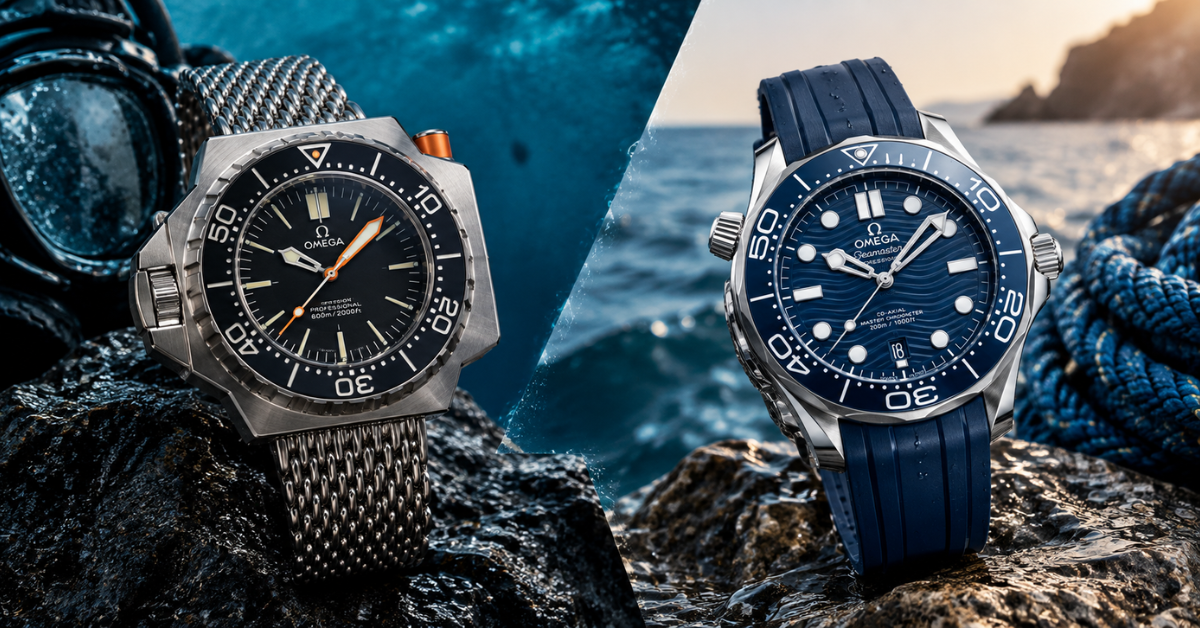
If you're weighing the Diver 300M against Omega's other current divers rather than against Seiko specifically, our Planet Ocean review and Seamaster 300 review cover how the rest of the lineup compares.
Buying With Confidence
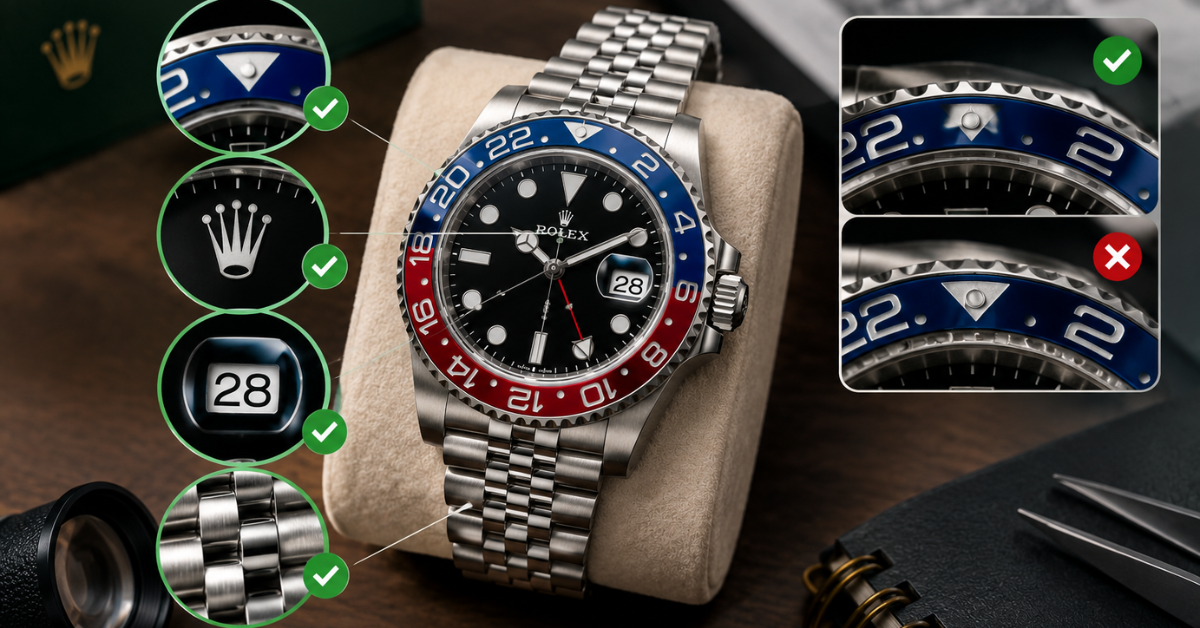
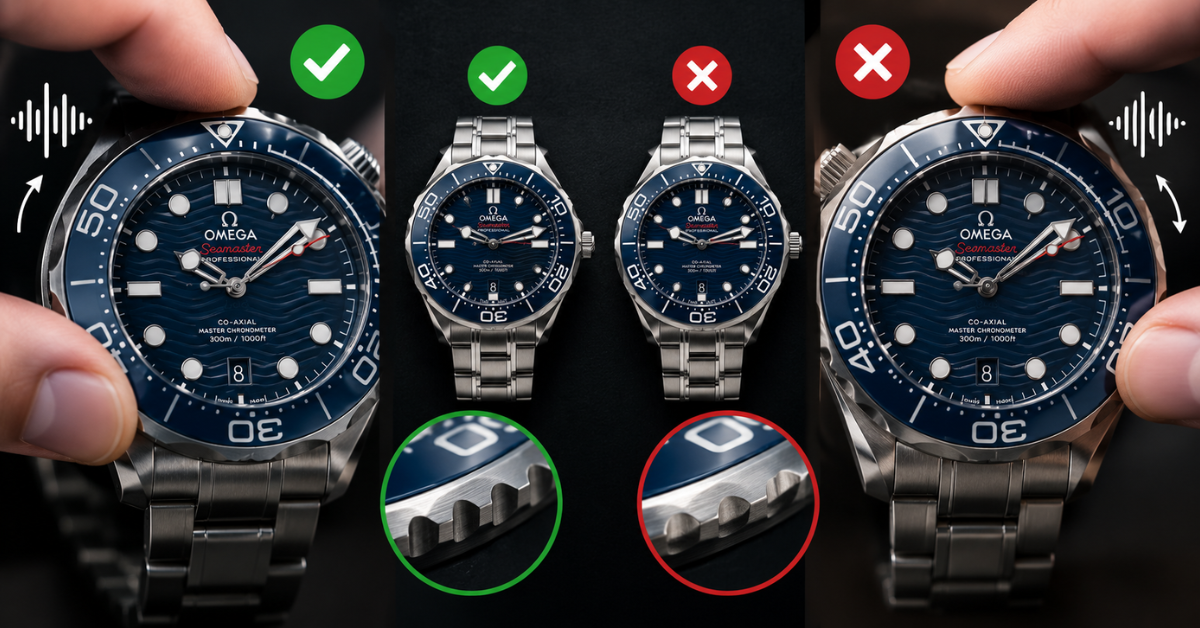
Given how recognizable the Diver 300M is, buying from an authorized source removes any authentication risk. Our general guide to spotting a fake Omega watch and our Seamaster bezel click test cover the checks worth running before any purchase, new or pre-owned.
FAQ
Is a Seiko 5 basically a cheaper Omega Seamaster? Not really — Seiko has its own independent diving heritage dating to the 1960s, and while some Seiko 5 references share design cues common across the dive-watch category, the two watches differ substantially in certification, materials, and movement.
How much more does the Diver 300M cost than a Seiko 5? Roughly 20 to 30 times more — the Diver 300M runs about $6,500 to $7,000, compared to $200 to $350 for a Seiko 5.
What does the Diver 300M's price actually buy compared to a Seiko 5? An independently METAS-certified Master Chronometer movement, 15,000-gauss magnetic resistance, a ceramic bezel, sapphire crystal, a genuine helium escape valve, and Omega's own manufacturing and service standards.
Is the Seiko 5 a good first automatic watch? Yes — it's widely considered one of the lowest-risk entry points into mechanical watches, with a proven, widely serviced movement.
Should I buy a Seiko 5 or save for a Diver 300M? It depends on your goals — many collectors start with a Seiko 5 to learn what they enjoy about mechanical watches, then work toward something like the Diver 300M later, and neither choice is a wrong one.
Conclusion
This comparison isn't really about picking a winner — it's about understanding what a price actually buys at each end of the dive-watch category. The Seiko 5 delivers honest, reliable value at its price point, no apologies needed. The Diver 300M delivers independently certified precision, genuine saturation-diving engineering, and three decades of design heritage, at a price that reflects all three. Both can be exactly the right watch, just for different moments in owning one.
Senior Watch Writer
James Whitfield
James has spent over a decade covering Swiss horology, vintage markets and modern releases. He believes the best watch is the one you actually wear.