On this page
The Omega Seamaster Planet Ocean is the more capable dive tool of Omega's two core divers — 600m water resistance versus the Diver 300M's 300m, a helium escape valve for saturation diving, and a titanium caseback, now in a redesigned 42mm case for 2026 that finally fixes the line's old oversized-fit problem. Pricing sits higher, generally $9,000 and up versus the Diver 300M's roughly $6,500–$7,000. Whether it's the "better" diver depends on the question: better tool watch, yes; better everyday watch with broader recognition, that's still the 300M.
Omega makes two watches that answer, on paper, the same question — "what's a genuinely capable dive watch?" — and gives two different answers. The Seamaster Diver 300M is the one everyone recognizes, thanks largely to two decades of James Bond films. The Planet Ocean is the one actual dive professionals and serious tool-watch buyers tend to reach for, and until this year, it came with a fit problem that kept a lot of people away from it entirely.
That changed with the 2026 redesign. This review covers what the new 42mm Planet Ocean actually gets right, where it still costs more than it needs to, and — the question everyone actually wants answered — whether it's worth choosing over the 300M.
The 2026 Redesign: Finally the Right Size
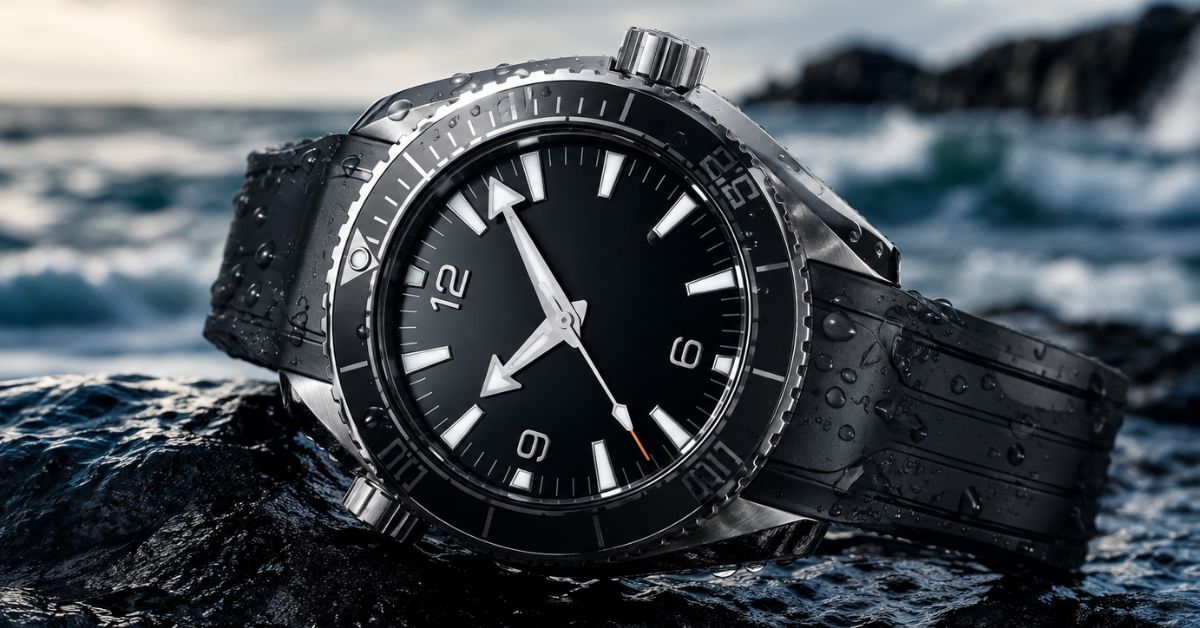
The Planet Ocean launched in 2005 at 42mm, which sounds identical to where it's landed again in 2026, except the years in between tell the real story. Through the 2010s, Omega pushed the line up to 43.5mm and then, for some references, all the way to 45.5mm — technically impressive, wearable on almost nobody with an average-sized wrist. It became a watch collectors admired in photos more than they actually wore.
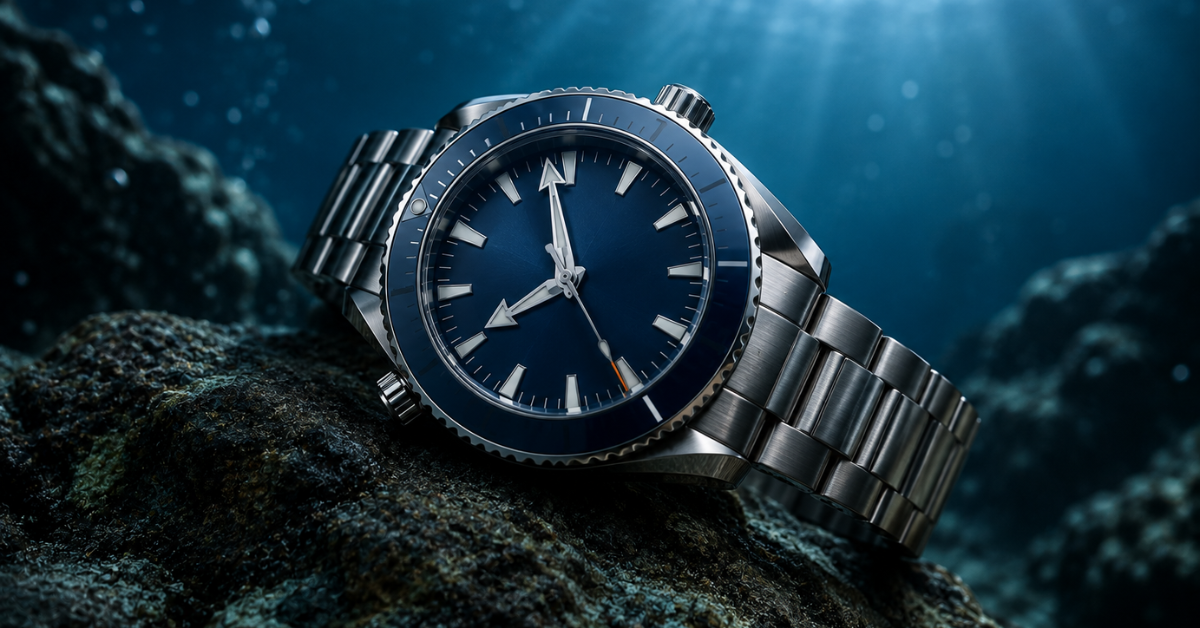
The current generation walks that back. Omega rebuilt the case from the ground up rather than simply shrinking the old one — sharper, more angular lugs, a flatter profile, and a case that sits noticeably slimmer on the wrist than the specs alone suggest. It's the first time in over a decade the Planet Ocean has felt like a watch built for daily wear rather than a display piece.
What Actually Sets It Apart From the Diver 300M
Strip away the marketing and the two watches differ in a handful of concrete, measurable ways — not just styling.
Water resistance is the headline number: 600 meters on the Planet Ocean against 300 meters on the Diver 300M. For the overwhelming majority of buyers, both numbers are absurd overkill — nobody's diving anywhere near either depth recreationally. But it's not purely a spec-sheet exercise. The Planet Ocean also carries a helium escape valve, a feature genuinely relevant to saturation diving, where helium in a pressurized habitat can seep into a watch case and needs a controlled way out during decompression. The Diver 300M doesn't have one. If you're the kind of buyer who wants the watch to be capable of the job it's dressed for, that's a real, not cosmetic, difference.
Caseback construction is the other underrated difference. The Planet Ocean's screw-in caseback is made from polished-brushed Grade 5 titanium rather than standard steel, adding a level of finishing and corrosion resistance that goes beyond what the job strictly requires — a small detail, but one that signals which watch Omega considers its flagship dive tool.
Bezel and dial execution favor the Planet Ocean too, at least on paper. The redesigned ceramic bezel uses a Liquidmetal or white-enamel diving scale depending on the reference, available in black, orange, or blue, paired with a flat sapphire crystal that reduces glare and distortion compared to the more domed crystal on some Diver 300M references.
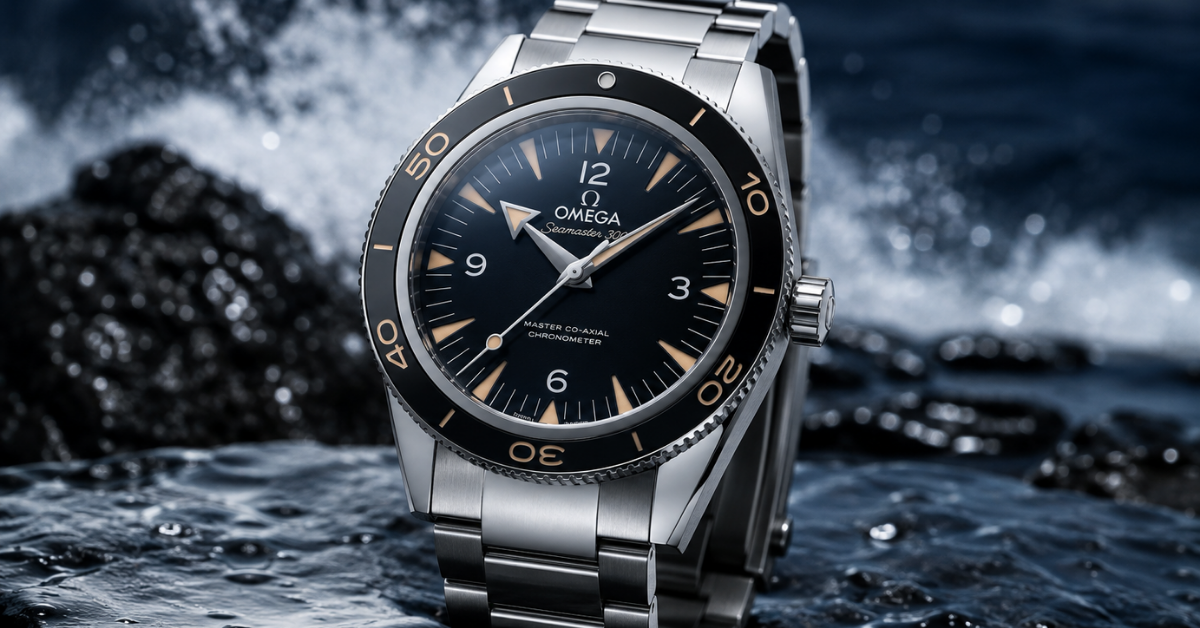
Where the Diver 300M pulls ahead is everything the spec sheet doesn't capture: the wave-pattern dial, the Bond association, and two decades of being the Omega most people can actually picture. Design language matters, and the 300M's is more instantly recognizable at a glance. For a full breakdown of that watch specifically, our Seamaster Diver 300M review covers where it sits on its own terms.
The Movement: Co-Axial Master Chronometer, Shared DNA
Both watches run Omega's Co-Axial Master Chronometer technology, METAS-certified against 15,000 gauss of magnetic resistance and independently tested by Switzerland's federal metrology institute rather than Omega itself — the same certification standard across the current Seamaster family. The Planet Ocean's Caliber 8912 delivers roughly 60 hours of power reserve, in line with what you'd expect from the current Diver 300M references as well.
In practice, this means the movement isn't really a differentiator between the two. Whichever one you choose, you're getting the same underlying engineering standard — the decision comes down to case, capability, and how the watch actually wears, not what's ticking inside it.
Pricing: A Real Gap, Not a Rounding Error
This is where the comparison gets more decisive. The 42mm steel-on-steel Planet Ocean generally lands around $9,000 to $9,500 at retail, while the current Diver 300M sits meaningfully lower, typically in the $6,500 to $7,000 range. That's not a small difference — it's close to a 35-40% premium for the Planet Ocean's added water resistance, helium valve, and titanium caseback.
Whether that premium is worth it depends entirely on whether you'll use any of what it buys you. If your honest answer is "probably not," the Diver 300M gets you nearly the same movement, the same certification, and more brand recognition for meaningfully less money. If you want our full take on where Omega's current lineup sits below the $20,000 mark more broadly, our guide to Best Omega Watches Under $20,000 puts the Planet Ocean's pricing in context against the rest of the catalog.
Who Should Actually Buy the Planet Ocean
The honest answer: buyers who want the more technically serious watch and don't mind paying for capability they may never use, the same way some people buy a truck they'll never take off-road. There's nothing wrong with that instinct — it's a genuinely well-built watch, and the 2026 case redesign removes the one real objection (fit) that kept it off a lot of shortlists for the past decade.
If your priority is instant recognizability, a lower price point, and a design more people will actually clock at a glance, the Diver 300M remains the more sensible everyday choice for most buyers. If you want the watch that's technically the more serious tool — deeper water resistance, the helium valve, the titanium caseback — the Planet Ocean earns that title honestly, not just through bigger numbers on a spec sheet.
Buying Confidently
Whichever one you land on, buying from an authorized dealer removes any authentication risk entirely. If you're considering the pre-owned route to close that price gap, it's worth knowing what to check first — our guide on how to spot a fake Omega watch covers the nine checks that matter most before you buy secondhand.
FAQ
Is the Omega Planet Ocean better than the Seamaster Diver 300M? It depends on what "better" means to you — the Planet Ocean is the more technically capable dive tool with 600m water resistance and a helium escape valve, while the Diver 300M offers more brand recognition and a lower price for buyers who won't use the extra depth rating.
What changed with the 2026 Planet Ocean redesign? Omega brought the case size back down to 42mm from the 43.5mm and 45.5mm sizes common through the 2010s, with a completely reworked case featuring a flatter profile, sharper lugs, and a redesigned ceramic bezel.
Does the Planet Ocean have a helium escape valve? Yes, which the Diver 300M does not — a feature relevant to saturation diving that lets trapped helium escape safely from the case during decompression.
How much more does the Planet Ocean cost than the Diver 300M? Roughly 35-40% more at current retail pricing — the Planet Ocean generally starts around $9,000, while the Diver 300M sits closer to $6,500 to $7,000.
Is the Planet Ocean or Diver 300M the better daily watch? For most buyers, the Diver 300M's lower price, wider recognition, and comparable everyday capability make it the more practical daily choice, while the Planet Ocean suits buyers who specifically want its added technical capability.
Conclusion
"Better" is doing a lot of work in this comparison, and the honest answer splits depending on what you're actually optimizing for. As a pure dive instrument, the Planet Ocean wins clearly — deeper rating, helium valve, sturdier caseback, and a 2026 case redesign that finally makes it wearable for more than just large wrists. As the watch you'll actually reach for most mornings, the Diver 300M still makes a strong case on price and recognition alone. Neither answer is wrong — it just depends on which watch you're actually buying.
Senior Watch Writer
James Whitfield
James has spent over a decade covering Swiss horology, vintage markets and modern releases. He believes the best watch is the one you actually wear.