On this page
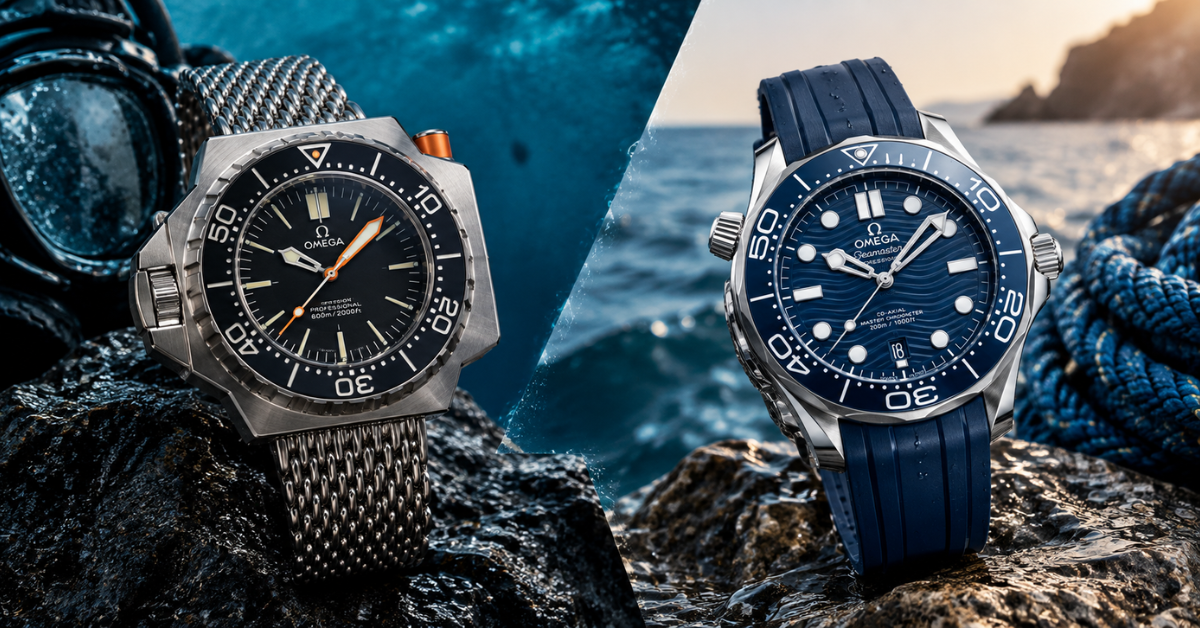
The Omega Ploprof and Seamaster Diver 300M are both genuine tool watches with real saturation-diving heritage, but they solve the same core problem in opposite ways. The Ploprof uses a monobloc, single-piece case sealed tightly enough that it never needed a helium escape valve, rated to 1,200 meters in a distinctive 55mm case starting around $7,000. The Diver 300M uses a conventional case with a functional helium valve, rated to 300 meters in a more wearable 42mm case starting around $6,500. For most buyers, the Diver 300M wins on everyday practicality and recognition; the Ploprof wins for buyers who specifically want genuine engineering distinctiveness and don't mind its unconventional, oversized presence.
These two watches rarely get compared directly, and that's worth correcting — both are genuine Omega tool watches built to solve the exact same saturation-diving problem, using completely different engineering solutions. Understanding that difference makes this a far more interesting comparison than "which dive watch is better."
Two Different Solutions to the Same Problem
Both watches exist because of helium. During saturation diving, helium used in a diver's breathing gas seeps into a watch case at depth; during decompression, that trapped helium expands faster than it can escape through normal seals, risking a blown crystal or worse. Both the Ploprof and the Diver 300M were built, in their own eras, to address exactly this.
The Diver 300M's solution, in keeping with the broader approach most dive watches use, is a helium escape valve — a one-way valve that vents trapped gas safely during decompression. The Ploprof takes a fundamentally different approach: its monobloc case, machined from a single piece of steel rather than assembled from separate components, is sealed tightly enough that helium can't meaningfully enter the case in the first place. No valve needed, because there's nothing to vent. Our full Ploprof deep-dive covers that engineering in more detail, including why its unusual case shape and left-side crown placement are functional necessities, not design accidents.
History: COMEX Prototype vs. Bond's Watch
The Ploprof's origin is genuinely obscure by comparison — developed in the late 1960s with COMEX, the French professional diving company, tested directly by Jacques Cousteau's teams, and commercially released in 1971 and 1972 as the Seamaster 600 Plongeur Professionnel. It was a research-driven tool built for a narrow, demanding professional use case, and it shows in every unconventional design choice.
The Diver 300M's story runs in the opposite direction, toward mainstream recognition rather than niche specialization. Introduced in 1993 with its now-signature wave-pattern dial, it became globally famous two years later when Pierce Brosnan wore it in GoldenEye, beginning an Omega-Bond partnership that's continued for three decades. Our full Seamaster Diver 300M review covers that watch's design evolution, including the significant 2018 update that brought a refined ceramic wave dial and current Master Chronometer movement technology.
The Water Resistance Gap
This is the most dramatic spec difference between the two, and it's worth contextualizing honestly. The Ploprof's modern 1200M generation is rated to 1,200 meters, while the Diver 300M carries its namesake 300-meter rating. That's a genuinely large gap on paper — but it's worth being direct that neither figure reflects a realistic need for the overwhelming majority of owners of either watch. Recreational diving rarely exceeds 40 meters; even serious technical diving rarely approaches 300 meters, let alone 1,200. The gap matters more as a statement about engineering ambition and target audience than as a practical capability either watch's owner will actually test.
Size and Wearability: The Real Everyday Difference
This is where the comparison actually resolves for most buyers. The Ploprof's 55mm case is genuinely oversized by any modern standard, with an asymmetrical, squared-off shape and a crown deliberately placed on the left side — a watch built to be noticed and, frankly, built for a specific kind of wrist and wearer who wants that presence. The Diver 300M's 42mm case is considerably more conventional, comfortable across a much wider range of wrist sizes, and easier to wear under a shirt cuff or through an ordinary workday without the Ploprof's inherent bulk.
Pricing
The Diver 300M generally starts around $6,500 to $7,000 at current retail. The Ploprof starts at a broadly similar point, around $7,000, but climbs considerably higher across its lineup — up to $18,000 and beyond depending on material and rarity, with the most sought-after modern reference typically trading around $10,000 on the secondary market. Vintage Ploprof examples, given the original Seamaster 600's discontinuation, often command similar or higher prices depending on condition and provenance.
Recognition and Collector Standing
The Diver 300M wins this comparison decisively — it's one of the most recognized dive watches in the world, largely thanks to its cinematic association, which matters enormously to buyers who value instant recognizability. The Ploprof occupies the opposite end of that spectrum entirely: a watch collectors specifically seek out because almost no one else recognizes it, valued precisely for its obscurity and its uncompromising engineering story rather than mainstream fame.
So, Which One Actually Wins?
Neither, in the way the question implies — they're built for genuinely different buyers, not competing on the same terms.
- Want a genuinely versatile daily dive watch with broad recognition and easier everyday wearability? The Diver 300M wins clearly.
- Want the more extreme, engineering-first tool watch, and don't mind an unconventional, oversized presence most people won't recognize? The Ploprof wins just as clearly, on its own terms.
- Want the lower entry price into genuine Omega dive-watch engineering? The Diver 300M is the more accessible starting point.
- Want a watch that solves the same underwater problem in the more distinctive, uncompromising way? That's the Ploprof's entire reason for existing.
Buying With Confidence
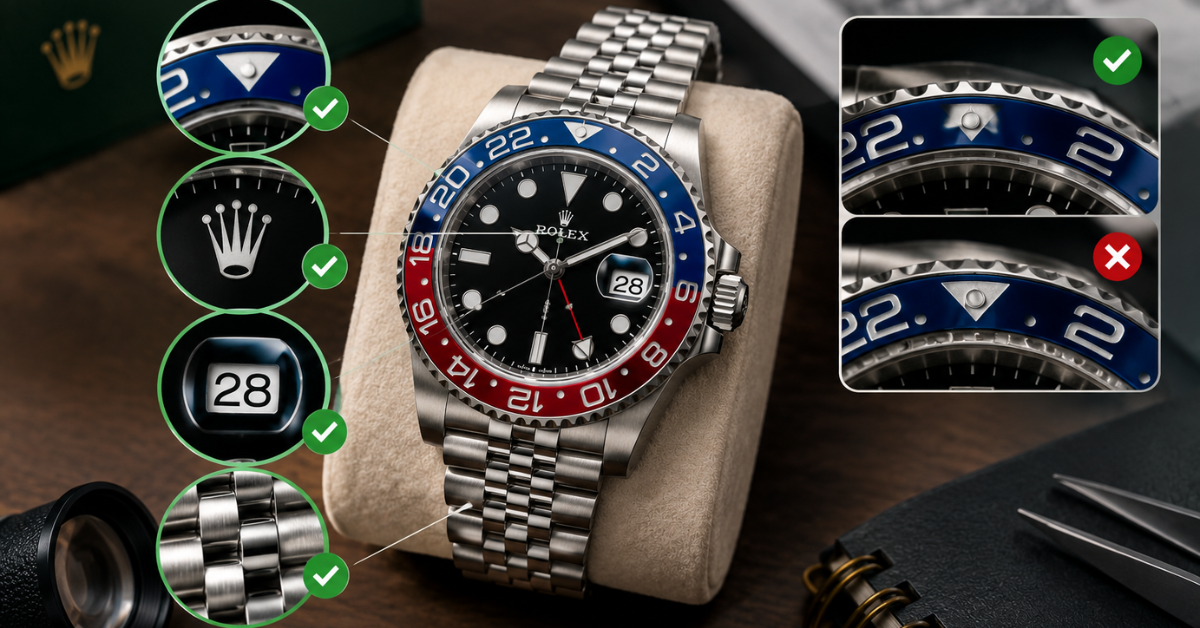
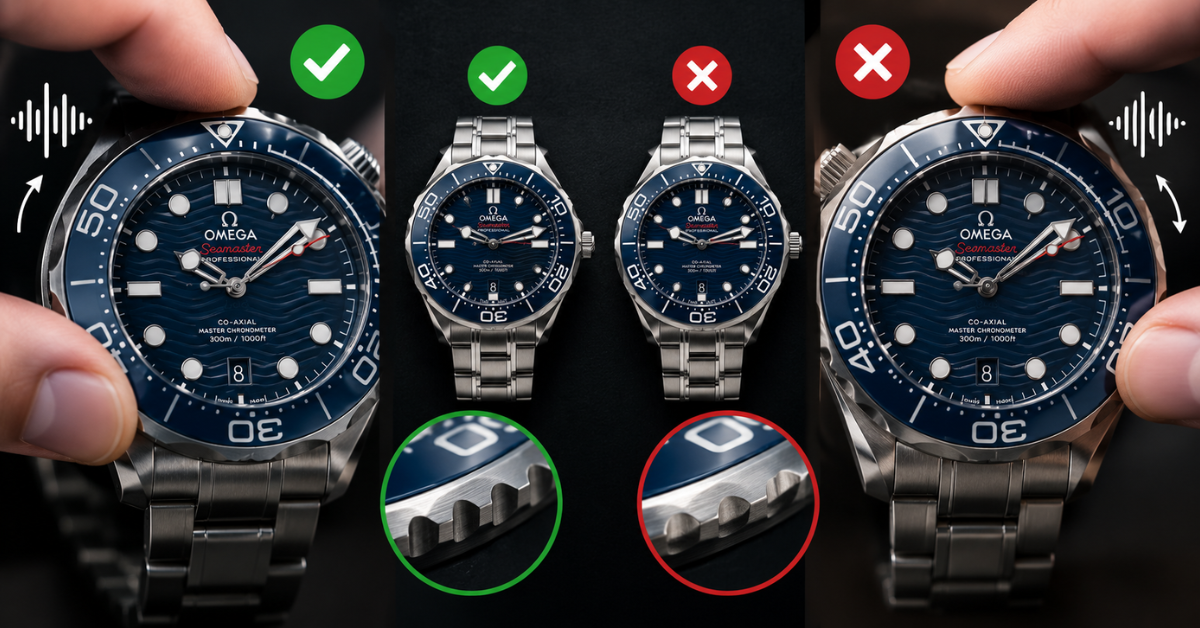
Given the values involved, particularly on Ploprof examples with claimed vintage provenance, buying from an authorized source or a verified reputable dealer matters. Our guide on how to spot a fake Omega watch covers the authentication fundamentals worth applying before any purchase, and our Omega Watches Buying Guide covers how to navigate the broader catalog if neither of these two turns out to be the right fit.
FAQ
Does the Omega Ploprof have a helium escape valve like the Diver 300M? No — its monobloc, single-piece case is sealed tightly enough that helium can't meaningfully enter during saturation diving, eliminating the need for a valve entirely, unlike the Diver 300M's conventional valve-based approach.
Which is more water resistant, the Ploprof or the Diver 300M? The modern Ploprof 1200M, rated to 1,200 meters, considerably exceeds the Diver 300M's 300-meter rating, though neither figure reflects a realistic need for most owners.
Which watch is easier to wear every day? The Diver 300M, at 42mm with a conventional case shape, wears more comfortably across a wider range of wrists than the Ploprof's oversized, asymmetrical 55mm case.
Which watch is more expensive, the Ploprof or Diver 300M? They start at a broadly similar price around $7,000, but the Ploprof climbs considerably higher across its lineup, up to $18,000 and beyond, while the Diver 300M stays closer to its $6,500 to $7,000 starting range.
Which watch is more recognizable? The Diver 300M, by a wide margin, thanks to its three-decade association with James Bond — the Ploprof is valued by collectors partly because it's genuinely obscure by comparison.
Conclusion
The Ploprof and Diver 300M answer the same engineering question — how do you protect a watch during saturation diving — in ways that couldn't be more different, and that difference is really the whole story here. One prioritizes mainstream wearability and instant recognition; the other prioritizes uncompromising, distinctive engineering over broad appeal. Both are genuinely excellent at what they set out to do. Which one wins depends entirely on which of those two goals you actually care about.
Features Writer
Daniel Cho
Daniel writes about watch design, collecting and the culture around horology, with a soft spot for tool watches and honest value.