On this page
- Design and Wearability
- Movement: Calibre 8800 and 8804
- Water Resistance and Dive Specs
- Bracelet and Strap Options
- Pricing and Value
- How It Compares
- Who Should Buy This Watch
- FAQ
- Is the Omega Seamaster Diver 300M a good first luxury watch?
- How deep can you actually dive with a Seamaster 300M?
- What's the difference between the 42mm and 38mm Diver 300M?
- Does the Seamaster 300M hold its value?
- Is the Seamaster 300M better than the Rolex Submariner?
- Final Thought
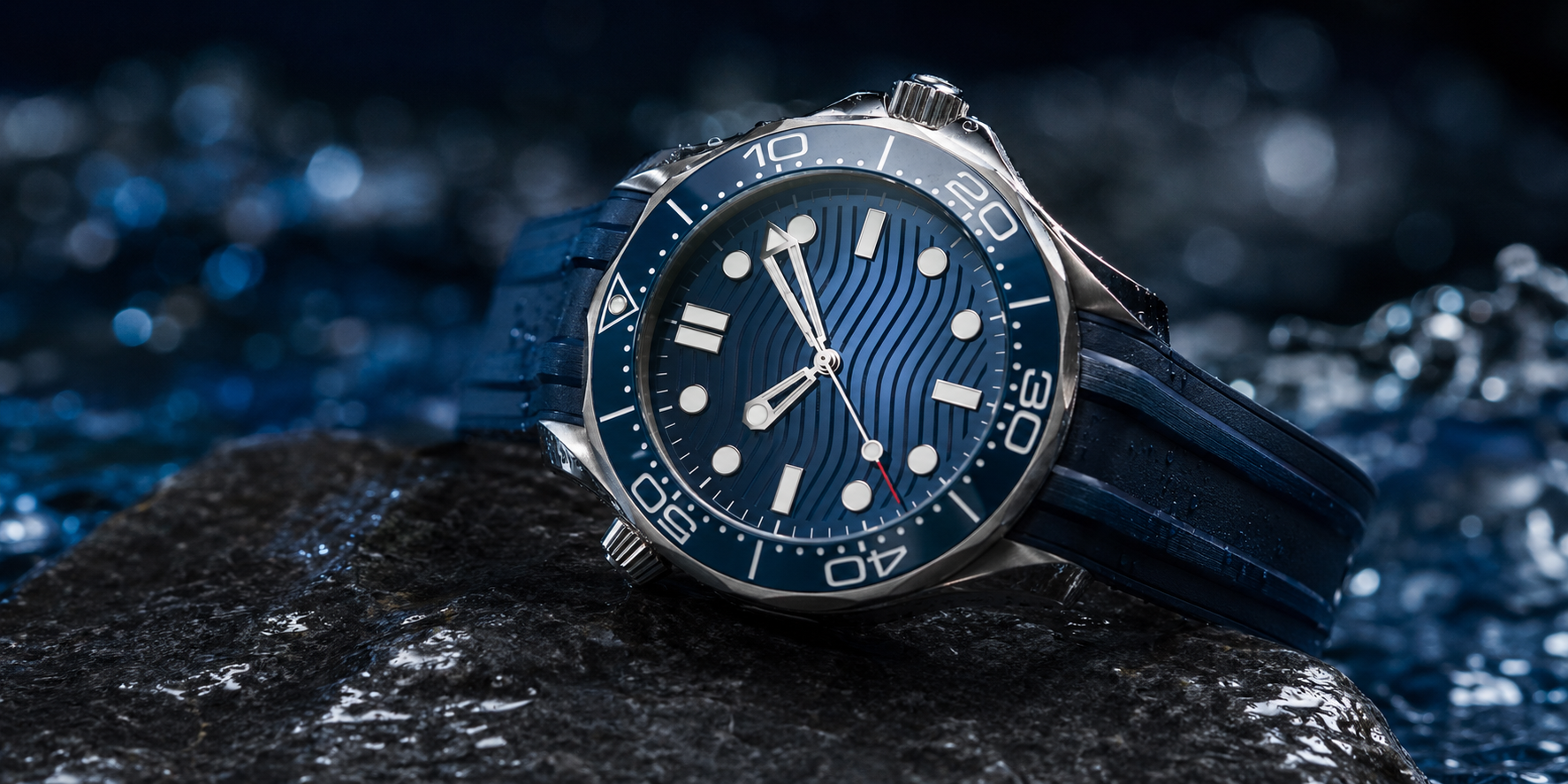
The Omega Seamaster Diver 300M is a 42mm dive watch rated to 300 meters, powered by Omega's Co-Axial Master Chronometer Calibre 8800/8804, starting at roughly $6,400 on a bracelet. It's Omega's best-selling model and, thanks to the James Bond connection, its most recognizable — but the appeal holds up on its own merits: genuine dive-watch durability, a helium escape valve, and a wave-pattern dial that reads as more refined than most tool watches at this price. It's the model we'd recommend to most first-time Omega buyers.
The Seamaster Diver 300M doesn't need the Bond association to sell itself, but it's worth addressing up front since it's the reason most people search for this watch in the first place. Daniel Craig wore one in every film starting with Casino Royale, and Omega has leaned into that ever since with special editions. Strip that away, though, and what's left is one of the more genuinely well-engineered dive watches in its price bracket. This review looks at what you're actually buying.
Design and Wearability
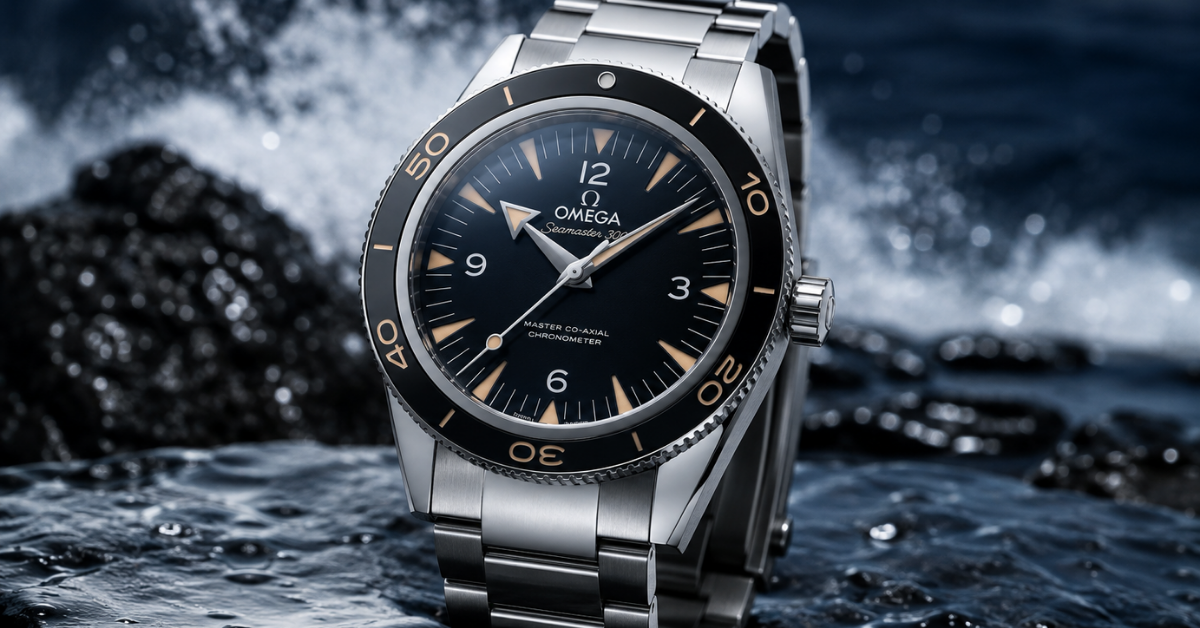
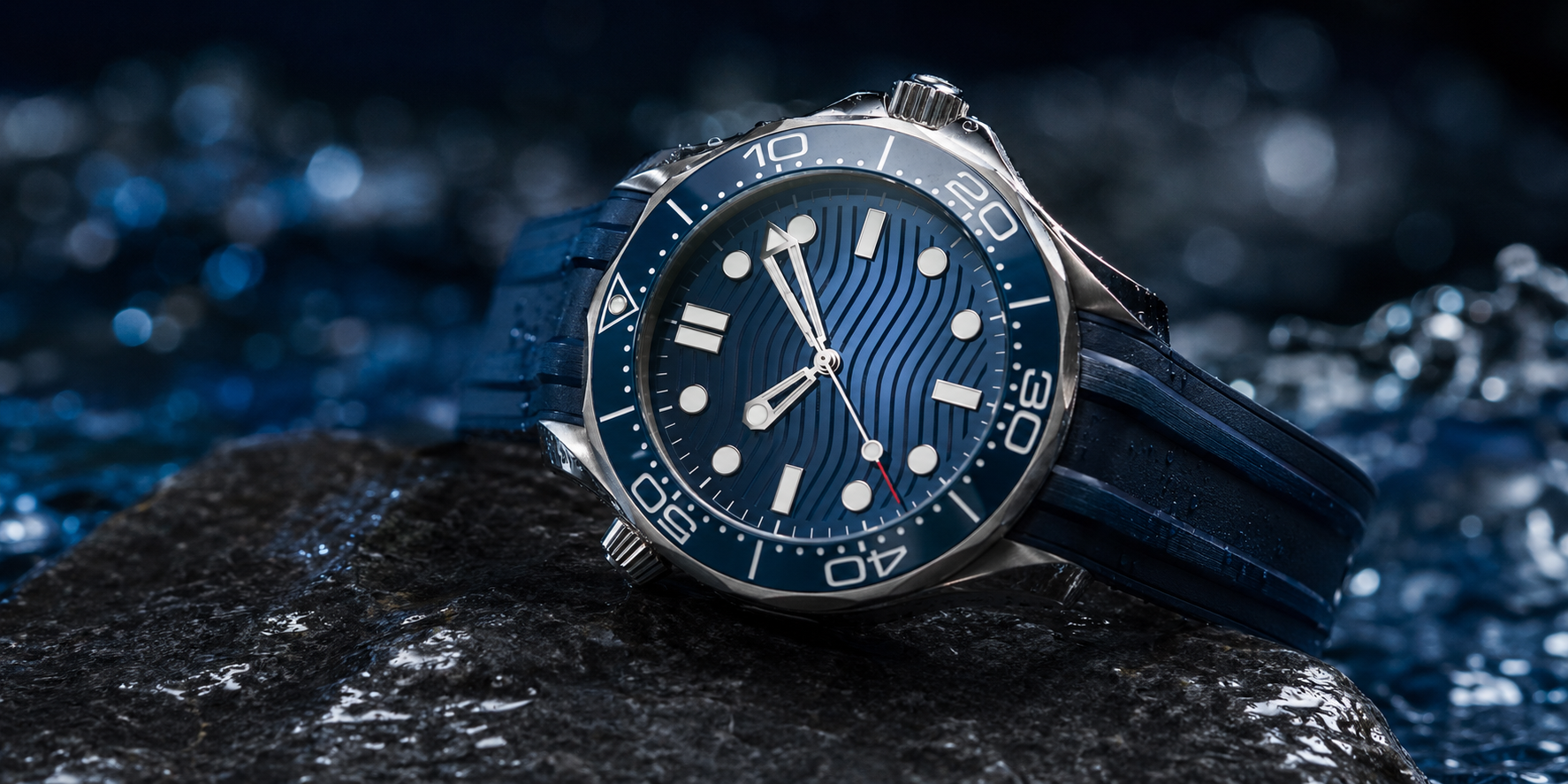
The current Diver 300M comes in 42mm and 38mm case sizes, with the 42mm being the one most people picture. The wave-pattern dial — a nod to the ripples on the ocean floor, borrowed from the original 1993 reference — is one of the more distinctive design choices in the segment; most competitors go with a flat sunburst or matte finish instead.
The unidirectional rotating bezel uses a ceramic insert with a Liquidmetal diving scale, which resists scratching far better than the aluminum bezels found on watches at half the price. The case itself is well finished for a tool watch, with polished chamfers along the lugs that most people don't notice until they're wearing it next to something cheaper.
On the wrist, the 42mm wears close to its stated size thanks to relatively short lugs, so it doesn't overhang the way some larger dive watches do. The 38mm option is worth a look if you're comparing case sizes against something like the Constellation, which we cover in our Omega Constellation review — the two sit at opposite ends of Omega's size and style range.
Movement: Calibre 8800 and 8804
Every current Diver 300M runs Omega's Co-Axial Master Chronometer movement — Calibre 8800 in the base three-hand version, Calibre 8804 in the GMT variant. Both are METAS-certified, which means they're independently tested for accuracy, power reserve, and resistance to magnetic fields up to 15,000 gauss.
In practical terms, that anti-magnetic resistance matters more than it sounds. Everyday exposure to phones, laptop speakers, and induction chargers can throw off a mechanical watch's accuracy over time; the Master Chronometer certification means the Diver 300M shrugs that off. Power reserve sits around 55 hours, so it'll comfortably survive a weekend off the wrist without needing a reset.
Movements like this are also part of why service intervals run longer than older Omega calibers — something worth weighing if you're deciding between this and a vintage or pre-2015 reference, a topic we go into more in our Omega watches buying guide.
Water Resistance and Dive Specs
Rated to 300 meters, the Diver 300M is genuinely capable of recreational scuba diving, not just a "water resistant" claim for splashes and showers. It includes a helium escape valve, a feature aimed at saturation divers who spend extended time in pressurized chambers — most owners will never need it, but its presence says something about how seriously the watch is engineered.
The unidirectional bezel with its luminous pip is functional for dive timing, not purely decorative, and the crown is a screw-down design that adds a second layer of water sealing beyond the case gaskets.
Bracelet and Strap Options
The stainless steel bracelet uses a tapering design with a diver's extension in the clasp, letting you adjust for a wetsuit or simply for wrist swelling in warm weather. It's well made, though on the heavier side — expect to notice the weight if you're used to lighter sport watches.
Rubber strap versions are available at a lower price point and wear noticeably cooler in warm climates. NATO and leather straps are common aftermarket swaps if you want to change the look without buying a second watch.
Pricing and Value
New pricing generally runs:
- Rubber strap, base three-hand: around $6,400
- Steel bracelet, base three-hand: around $7,200–$7,900
- GMT variant: around $8,700–$9,600
- Special editions (Bond, Nekton, etc.): often $8,000+ and subject to premiums on the secondary market
Pre-owned prices for the standard bracelet model typically land 15–25% below retail, making this one of the better value plays in the Omega lineup if you're not fussed about being the first owner. We break down specific pre-owned value picks in Best Omega Watches Under $5,000, where older Diver 300M references show up regularly.
How It Compares
Against the Rolex Submariner, the Diver 300M is generally more affordable and easier to actually buy — no waitlists, no allocation games — while offering comparable water resistance and a movement that's arguably more technically advanced on paper. Against Omega's own Planet Ocean, the Diver 300M is thinner, dressier, and a bit more versatile outside the pool, while the Planet Ocean leans harder into dedicated dive-tool territory.
If authenticity is a concern when shopping pre-owned — and it should be, given how often this specific model gets counterfeited — run through our guide on how to spot a fake Omega watch before buying from anyone outside an authorized dealer.
Who Should Buy This Watch
The Diver 300M makes the most sense for someone who wants one watch that handles a desk job, weekend errands, and actual swimming without a second thought. It's less suited to anyone who wants a strictly formal dress watch — the Constellation or De Ville fit that role better — or anyone chasing serious watch-collector rarity, since this is Omega's highest-volume model rather than a limited piece.
FAQ
Is the Omega Seamaster Diver 300M a good first luxury watch?
Yes — it's durable enough for daily wear, priced in the middle of Omega's lineup, and versatile across casual and semi-formal settings, which makes it a common recommendation for first-time buyers.
How deep can you actually dive with a Seamaster 300M?
It's rated to 300 meters of water resistance, which comfortably covers recreational scuba diving well beyond recommended depth limits for most divers.
What's the difference between the 42mm and 38mm Diver 300M?
The 42mm is the standard men's size with a broader range of dial colors and the GMT option; the 38mm is a smaller, unisex-leaning case aimed at those who prefer a more compact fit.
Does the Seamaster 300M hold its value?
Standard references hold value reasonably well on the pre-owned market, though not as strongly as comparable Rolex Submariner models. Special editions tied to Bond or other collaborations tend to hold value better.
Is the Seamaster 300M better than the Rolex Submariner?
Neither is objectively "better" — the Submariner has stronger resale value and brand cachet, while the Diver 300M offers comparable specs, easier availability, and a lower price point. The right choice depends on priorities around resale versus value for money.
Final Thought
The Seamaster Diver 300M earns its reputation as Omega's default recommendation for a reason — it's a genuinely capable dive watch that doesn't ask you to compromise on daily wearability. Whether the Bond connection matters to you or not, the engineering underneath holds up on its own.
Reviews Editor
Sofia Marchetti
Sofia focuses on dive watches, chronographs and everyday wearability, testing every piece in real-world conditions before forming a verdict.