On this page
- A Watch That Looks Old and Does Something New
- Why a Two-Hand Master Chronometer Wasn't Possible Before
- How Omega Solved It: Dual Metric Technology
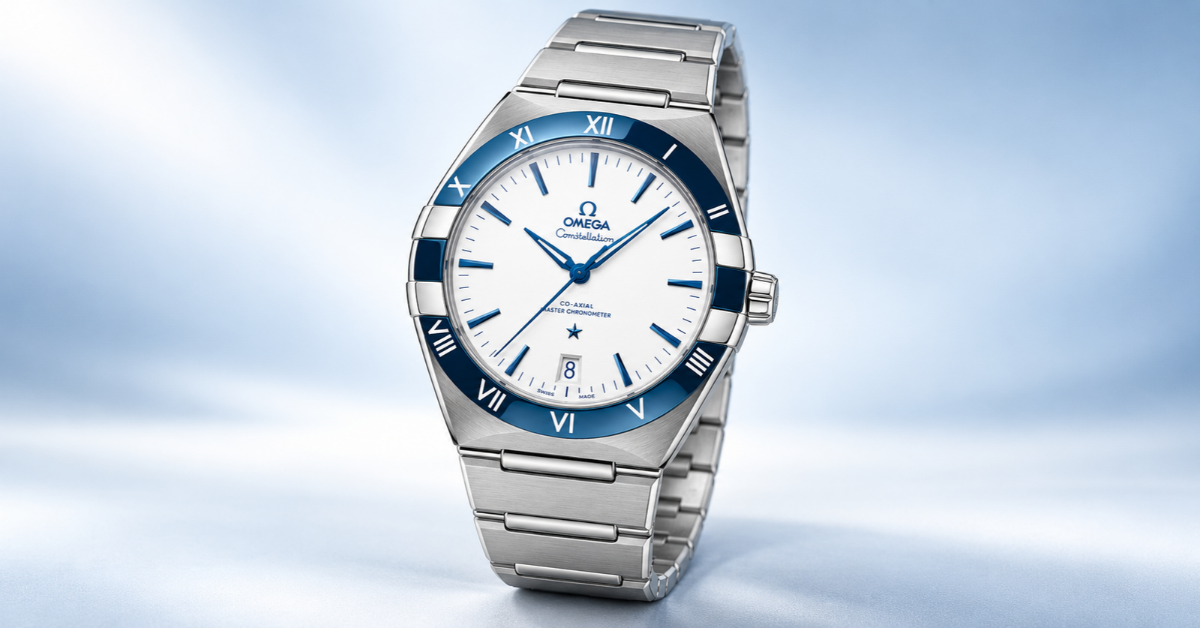
- Why the Constellation Is the Right Watch for This First
- Design: 1950s Details, Built Today
- The New Calibres 8914 and 8915
- Constellation Observatory Specs
- Constellation Observatory Prices
- Who Should Buy the Constellation Observatory?
- Is It Worth $10,900?
- Buying Tips
- Frequently Asked Questions
- Why is the Omega Constellation Observatory a first?
- What is Dual Metric Technology?
- How much does the Omega Constellation Observatory cost?
- What movement is in the Constellation Observatory?
- How big is the Omega Constellation Observatory?
- Is the Constellation Observatory more accurate than other Omegas?
- The Bottom Line
A Watch That Looks Old and Does Something New
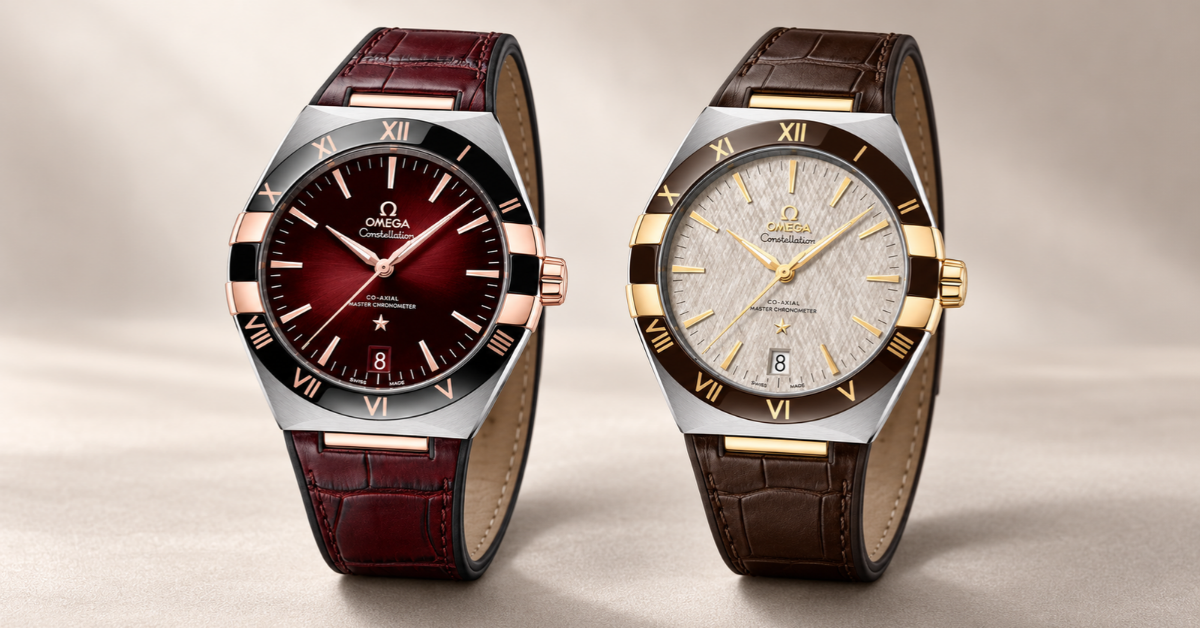
At first glance, the Omega Constellation Observatory looks like a lovely piece of 1950s nostalgia. There's the faceted pie-pan dial, the dog-leg lugs, the little star at 6 o'clock. It's a dress watch with two hands. Nothing radical.
Except it is. Behind that vintage face sits something no watch has managed before: top-level precision certification without a seconds hand.
That might sound like a small technical footnote. It isn't. It changes what a "certified" precision watch can look like, and it hands Omega a genuine world first in a category that's been around for decades. Here's what makes it a first, how the new testing works, and whether the Observatory deserves a place on your wrist.
Why a Two-Hand Master Chronometer Wasn't Possible Before
To understand the "first," you need to know how precision testing has always worked.
A Master Chronometer is a watch certified by METAS, the Swiss Federal Institute of Metrology. It's tougher than standard COSC chronometer testing. The fully cased watch is checked for accuracy, power reserve, water resistance and resistance to magnetic fields up to 15,000 gauss. If you want the background on why Omega's movements hold up so well under that kind of testing, our story on how Omega's Co-Axial escapement changed watchmaking explains it.
The catch was always the seconds hand. Traditional chronometer testing tracks accuracy visually, by reading a seconds hand at set intervals. No seconds hand, no reading. So a minimalist watch with only hours and minutes simply couldn't be certified, however good its movement was.
That's why every Master Chronometer until now has had a seconds hand, even dress watches where a cleaner two-hand dial might have looked better.
How Omega Solved It: Dual Metric Technology
Omega's answer was to stop looking and start listening.
At its Laboratoire de Précision, an independently accredited testing facility certified by METAS, Omega developed a new acoustic method called Dual Metric Technology. Instead of checking a seconds hand at intervals, it records the sound of every oscillation of the movement, both the "tick" and the "tack," throughout a 25-day testing cycle.
That has two big advantages:
- No seconds hand needed. The movement's sound tells the testers everything, so the dial can be as simple as the designer wants.
- Much more data. Visual checks only capture snapshots. Continuous listening shows not just when a watch drifts, but exactly when and why, across different positions, temperatures and conditions.
Omega's CEO, Raynald Aeschlimann, summed it up simply: precision certification used to require a seconds hand, and this new method has made that requirement obsolete.
Why the Constellation Is the Right Watch for This First
Omega could have launched this technology in any collection. Choosing the Constellation was a deliberate nod to history.
The Constellation arrived in 1952 and was built around precision from day one. Its name and its famous caseback medallion, showing an observatory under eight stars, celebrate the observatory chronometer trials where Omega movements competed and won for decades. Those trials were the gold standard of accuracy long before METAS existed.
So the "Observatory" name isn't just marketing. It links Omega's old observatory record-chasing to its newest testing technology. For a closer look at how the wider modern Constellation range compares, see our Omega Constellation review.
Design: 1950s Details, Built Today
The Observatory is a new sub-collection, not just a re-dial of the current Constellation. It brings back the look of the 1950s originals, with a few modern upgrades.
- Pie-pan dial: the faceted, sloping dial edge that made 1950s Constellations famous
- Constellation star at 6 o'clock
- Dog-leg lugs: angular, faceted lugs taken from vintage models
- Faceted bezel that catches the light from every angle
- Observatory medallion on the caseback
- Integrated, tapered bracelet on bracelet versions
One standout is the black ceramic pie-pan dial on the O-megasteel version. Making ceramic hold those sharp facets is difficult, and it gives the dial a deep, glossy look that ordinary painted dials can't match.
The New Calibres 8914 and 8915
Two new automatic movements power the collection, both Co-Axial Master Chronometers:
- Calibre 8914: rhodium-plated, used in the O-megasteel references
- Calibre 8915: used in the precious-metal Luxe and Grand Luxe models, with Sedna or Moonshine Gold elements in the movement itself
Both share the same specs and the same certification. They beat at 3.5Hz, store about 60 hours of power reserve, and use skeletonised rotors and bridges with Geneva waves in arabesque. Each rotor carries an applied observatory medallion in the matching metal, so you'll see the theme again through the sapphire caseback.
Constellation Observatory Specs
- Case diameter: 39.4mm
- Thickness: 12.23mm
- Display: hours and minutes only
- Movement: Omega Co-Axial Master Chronometer calibre 8914 or 8915, automatic
- Frequency: 3.5Hz
- Power reserve: about 60 hours
- Magnetic resistance: 15,000 gauss (Master Chronometer standard)
- Certification: METAS Master Chronometer, tested with Dual Metric Technology
- Materials: O-megasteel, 18k Sedna Gold, 18k Moonshine Gold, 18k Canopus Gold and platinum
- Launch: March 26, 2026
Constellation Observatory Prices
- O-megasteel: from $10,900, with the black ceramic-dial version priced a little higher
- 18k Moonshine Gold on strap (ref. 140.53.39.21.99.001): $37,900
- Precious-metal bracelet models: up to $59,100 at the top of the range
In Europe, the collection starts at €10,800. All prices are before local taxes.
That's a real step up from the regular Constellation, which starts around $7,400 in steel. You're paying extra for the new movement, the world-first certification and the more elaborate vintage-style case and dial.
Who Should Buy the Constellation Observatory?
It's a great fit if you want a refined dress watch with genuine technical substance. Two-hand watches usually trade function for elegance. This one doesn't, because it's certified to the same standard as Omega's toughest sports watches.
It suits collectors who like owning a "first." Watches that mark a technical milestone tend to be remembered, and the first two-hand Master Chronometer is exactly that kind of watch.
It's less ideal if you like checking the seconds, or you want a watch for sport. With 39.4mm and a slim-ish 12.23mm case, this is a dress-leaning watch. If you're still choosing between Omega's dress lines, our De Ville vs Constellation comparison breaks down which suits you, and the Constellation Celestial Blue shows another side of the family.
Is It Worth $10,900?
For the right buyer, yes. You get Omega's best movement technology, a dial and case that look genuinely special, and a world first you can actually explain at dinner.
The honest counterpoint: in daily life, the two-hand certification doesn't make it keep better time than a regular Constellation. Both are Master Chronometers. What you're really paying for is the cleaner design that this new testing allows, plus the history and finishing. If those matter to you, the price makes sense. If you just want an accurate Omega, the standard Constellation does the job for less.
Value-wise, remember that new Omegas usually trade below retail on the pre-owned market, especially in their first years. Our analysis of Omega vs Rolex value retention covers what to expect.
Buying Tips
Buy from an Omega boutique or authorised dealer, especially for a recent release with a high price tag. Fakes of new models appear quickly, and the integrated bracelet is one of the first things counterfeiters get wrong. Our guides on how to spot a fake Omega and checking whether an Omega bracelet is genuine are worth reading before you buy anywhere else.
Frequently Asked Questions
Why is the Omega Constellation Observatory a first?
The Omega Constellation Observatory is the first two-hand watch to achieve Master Chronometer certification. Precision testing traditionally needed a seconds hand, but Omega's new acoustic Dual Metric Technology measures the movement's sound instead, allowing a watch with only hours and minutes to be certified.
What is Dual Metric Technology?
Dual Metric Technology is Omega's acoustic testing method, developed at its METAS-certified Laboratoire de Précision. It records the sound of every tick and tack of the movement during a 25-day test, analysing accuracy across positions and conditions without needing a seconds hand.
How much does the Omega Constellation Observatory cost?
The Omega Constellation Observatory costs from $10,900 for O-megasteel models up to $59,100 for precious-metal bracelet versions, before taxes. The 18k Moonshine Gold model on a strap costs $37,900.
What movement is in the Constellation Observatory?
The Constellation Observatory uses the new Omega Co-Axial Master Chronometer calibre 8914 in O-megasteel models and calibre 8915 in precious-metal models. Both are automatic, beat at 3.5Hz and offer about 60 hours of power reserve.
How big is the Omega Constellation Observatory?
The Constellation Observatory has a 39.4mm case that is 12.23mm thick, with faceted dog-leg lugs and a faceted bezel. It suits most wrists as a dress watch.
Is the Constellation Observatory more accurate than other Omegas?
Not in everyday wear. It meets the same Master Chronometer standard as other certified Omegas. What's new is that it achieves that standard without a seconds hand, thanks to the new acoustic testing method.
The Bottom Line
The Constellation Observatory is a first because Omega changed the test, not just the watch. By listening to a movement instead of watching a seconds hand, it opened the door to certified precision in the simplest, most elegant dial possible.
It wears like a beautiful 1950s dress watch. It performs like a modern Master Chronometer. And it's the first watch that's ever been able to say both.
Editor-in-Chief
Editorial Team