On this page
- Two Seamasters, Two Missions
- The Diver 300M: Omega's dive watch icon
- The Aqua Terra: the versatile middle child
- Design: Bold Tool vs Quiet Elegance
- Diver 300M
- Aqua Terra
- Size and Comfort: The Biggest Real-World Difference
- Water Resistance: Do You Actually Need 300 Metres?
- Movement: Same Master Chronometer Quality
- Price and Value
- Day-to-Day Living: Which One Fits Your Life?
- The office
- The weekend
- Travel
- Formal events
- Diver 300M or Aqua Terra: Which Should You Buy?
- The Verdict
- FAQ
- Is the Aqua Terra or Diver 300M better for everyday wear?
- Can you swim with the Omega Aqua Terra?
- Which is more expensive, the Diver 300M or Aqua Terra?
- Is the Diver 300M too big for a small wrist?
- Do the Diver 300M and Aqua Terra use the same movement?
- Which holds its value better?
In the Seamaster Diver 300M vs Aqua Terra choice, buy the Diver 300M if you want a true dive watch with 300 metres of water resistance, a rotating ceramic bezel and James Bond swagger, from $5,900. Buy the Aqua Terra if you want one refined watch for the office, weekends and the pool, with 150 metres of water resistance and a slimmer profile, from about $6,200. Same Seamaster family, very different personalities.
Both carry the Seamaster name. Both use Omega's Master Chronometer movements. Both are happy in the water. And both sit in almost exactly the same price bracket.
Yet put a Diver 300M and an Aqua Terra side by side and they look like they belong to different people. One is a bold, wave-dialled dive watch that turns heads. The other is a quiet, elegant sports watch that slides under a shirt cuff and gets on with its day.
So which one is right for you? I've compared the current Diver 300M and Aqua Terra 150M on everything that matters day to day — design, comfort, water resistance, movement, price and resale — so you can choose with confidence.
Two Seamasters, Two Missions
The Diver 300M: Omega's dive watch icon
The Seamaster Diver 300M arrived in 1993 and became famous two years later when James Bond started wearing one. It's Omega's flagship dive watch: a 42mm case, a unidirectional ceramic bezel, a helium escape valve and the signature laser-engraved wave dial.
It's built for diving first. Everything else is a bonus.
The Aqua Terra: the versatile middle child
The Aqua Terra takes a different approach. As its name suggests — "aqua" and "terra" — it's designed to be equally at home in water and on land. There's no rotating bezel and no helium valve, just a clean dial, a slim case and a look that works with a suit.
Our Aqua Terra review calls it the versatile middle sibling of the Seamaster family, sitting between Omega's specialist divers and its dress watches.
Design: Bold Tool vs Quiet Elegance
Diver 300M
The Diver 300M is all character. The ceramic bezel with its enamel or polished markings, the wave-engraved ceramic dial, the skeleton sword hands and the helium valve at 10 o'clock make it instantly recognisable from across a room. It looks like exactly what it is: a serious dive watch with a touch of glamour.
Aqua Terra
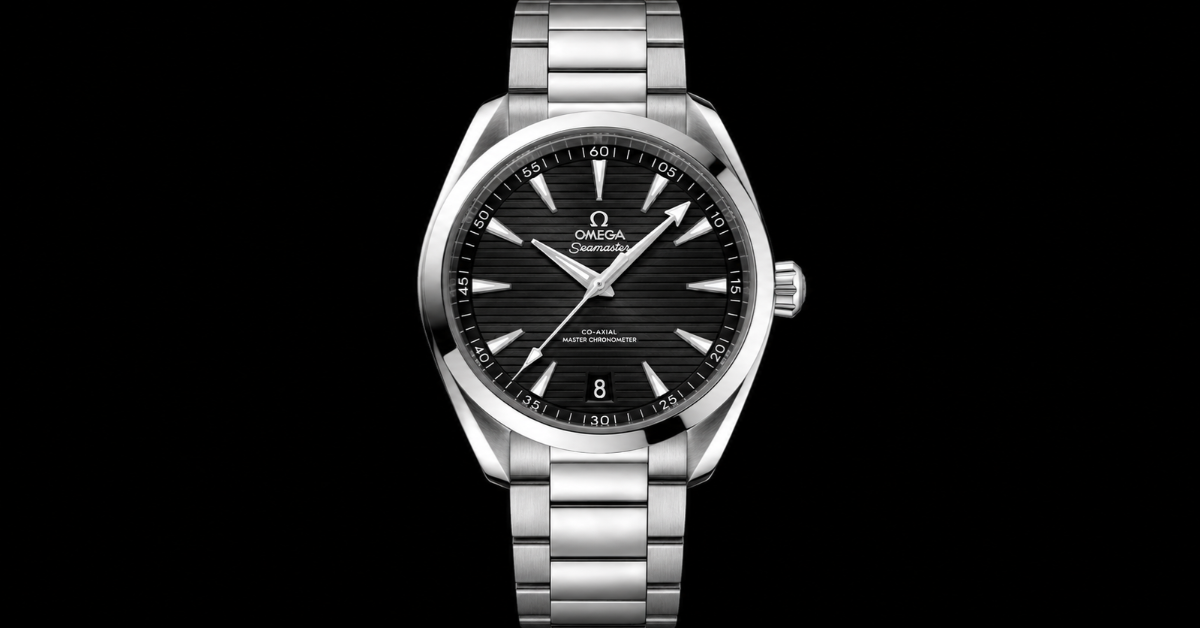
The Aqua Terra is understated by design. Its signature "teak" dial, with vertical lines inspired by the wooden decks of luxury sailing yachts, adds texture without shouting. The smooth, polished bezel keeps the profile clean. It reads as refined first and sporty second.
The simple test: if you want a watch that gets noticed, choose the Diver 300M. If you want one that looks expensive without trying too hard, choose the Aqua Terra.

Size and Comfort: The Biggest Real-World Difference
This is where many buyers make their decision, often without realising it.
The Diver 300M comes in one main size: 42mm, around 13.6 to 13.7mm thick and about 50mm lug to lug. That's a substantial watch, and the extra thickness can catch on a tight shirt cuff.
The Aqua Terra comes in two main sizes. The 41mm measures about 13.2mm thick with a 20mm lug width, and the 38mm is slimmer still at around 12.3mm. Its lug-to-lug is noticeably shorter than the Diver's, at roughly 47.7mm on the 41mm, so it sits more neatly on most wrists.
- Smaller wrist (under 6.5 inches): Aqua Terra 38mm
- Average wrist (6.5 to 7.25 inches): Aqua Terra 41mm, or the Diver 300M if you like more presence
- Larger wrist (7.25 inches and up): either works well
One practical note: the Aqua Terra 38mm uses a 19mm lug width, which limits third-party strap choices. The 41mm Aqua Terra and Diver 300M both use 20mm, the most common strap size.
Water Resistance: Do You Actually Need 300 Metres?
The Diver 300M is rated to 300 metres and has a helium escape valve for professional saturation diving. It's a genuine dive watch, ready for scuba.
The Aqua Terra is rated to 150 metres, with a screw-down crown. That's plenty for swimming, snorkelling, beach holidays and everyday splashes. As The Watchology notes, it's rated for swimming and snorkelling but not built for scuba diving.
Here's the honest truth: most Diver 300M owners never go deeper than a hotel pool. Unless you actually scuba dive, 150 metres covers everything you'll realistically do.
Who wins? If you dive, the Diver 300M — no contest. If you don't, the Aqua Terra does everything you need.

Movement: Same Master Chronometer Quality
Good news: you don't sacrifice anything mechanically whichever you choose.
- Diver 300M: Calibre 8800, with a 55-hour power reserve
- Aqua Terra 38mm: Calibre 8800, with a 55-hour power reserve
- Aqua Terra 41mm: Calibre 8900, with a 60-hour power reserve
All of them are Co-Axial Master Chronometers, tested by the Swiss institute METAS for accuracy of 0/+5 seconds a day and resistance to magnetic fields of 15,000 gauss. That's one of the toughest certifications in watchmaking, and it means either watch will shrug off the magnets in your phone, laptop and bag.
The Aqua Terra 41mm has one small extra: an independently adjustable hour hand, which makes changing time zones easy when you travel. Its sapphire display caseback also shows off the decorated movement, which many owners love.
Price and Value
The two are closer in price than you might expect.
- Seamaster Diver 300M: $5,900 on rubber, $6,500 on a steel bracelet, and $7,200 in titanium
- Seamaster Aqua Terra 41mm: around $6,200 to $6,950 in steel
On the pre-owned market, both are excellent value. Omega watches generally sell 30% to 40% below retail, and a used Aqua Terra 41mm typically trades in the low-to-mid $4,000s. The Diver 300M tends to hold its value a little better thanks to its Bond fame and huge popularity.
If resale matters to you, the Diver 300M has a slight edge. If you're buying to wear for years, the difference is small enough to ignore.

Day-to-Day Living: Which One Fits Your Life?
The office
The Aqua Terra wins easily. It's slimmer, more discreet and looks perfectly at home with a suit. The Diver 300M works too, but its size and bold bezel make it feel more casual.
The weekend
The Diver 300M shines here. It looks great with a T-shirt, on a rubber strap or a NATO, and it's built for adventure.
Travel
Both are excellent travel companions. The Aqua Terra 41mm's independent hour hand gives it a small edge for crossing time zones, while the Diver 300M is the one you'll want for diving holidays.
Formal events
The Aqua Terra, every time. For something even dressier, Omega's dedicated dress collection is the De Ville — our De Ville review explains where it sits next to the Aqua Terra.
Diver 300M or Aqua Terra: Which Should You Buy?
Buy the Seamaster Diver 300M if:
- You scuba dive or spend a lot of time in the water
- You want a bold, instantly recognisable sports watch
- You love the James Bond connection
- You mostly dress casually and want a statement weekend watch
- Resale value is part of your thinking
Buy the Seamaster Aqua Terra if:
- You want one watch that works everywhere, from the office to the beach
- You wear shirts and suits regularly
- You prefer a slimmer, more comfortable watch
- You have a smaller wrist and want the 38mm option
- You travel often and like the independent hour hand
Still undecided? Many Omega owners end up with both — a Diver 300M for weekends and holidays, and an Aqua Terra for everything else. If you'd rather a third option with a famous story, the Speedmaster is worth a look too; our Speedmaster Moonwatch price guide covers every current model.

The Verdict
The Diver 300M and Aqua Terra prove how wide the Seamaster family really is. Same name, same excellent movements, same price bracket — and completely different reasons to buy.
If your life involves the sea, or you simply want a watch with swagger, the Diver 300M is the one. It's bold, tough and iconic.
But for most people, most of the time, the Aqua Terra is the smarter daily companion. It's slimmer, more versatile and quietly brilliant at being the only watch you need.
Ask yourself one question: will you dive with it, or live with it? Your answer is your watch.
FAQ
Is the Aqua Terra or Diver 300M better for everyday wear?
The Aqua Terra is better for everyday wear for most people. It's slimmer, more discreet and works with both casual and formal clothing, while still offering 150 metres of water resistance.
Can you swim with the Omega Aqua Terra?
Yes. The Aqua Terra is water resistant to 150 metres with a screw-down crown, which is suitable for swimming and snorkelling. It isn't designed for scuba diving.
Which is more expensive, the Diver 300M or Aqua Terra?
They're close. The Diver 300M costs $5,900 on rubber and $6,500 on a bracelet, while the Aqua Terra 41mm in steel runs around $6,200 to $6,950.
Is the Diver 300M too big for a small wrist?
It can be. At 42mm, around 13.6mm thick and about 50mm lug to lug, it wears large. Smaller wrists usually suit the Aqua Terra 38mm better.
Do the Diver 300M and Aqua Terra use the same movement?
The Diver 300M and Aqua Terra 38mm both use the Calibre 8800 with 55 hours of power reserve. The Aqua Terra 41mm uses the Calibre 8900 with 60 hours. All are Master Chronometer certified.
Which holds its value better?
The Diver 300M usually holds its value slightly better, thanks to its popularity and James Bond connection. Both typically sell below retail on the pre-owned market.
Reviews Editor
Sofia Marchetti
Sofia focuses on dive watches, chronographs and everyday wearability, testing every piece in real-world conditions before forming a verdict.